FlyFysher
Woolly Bugger
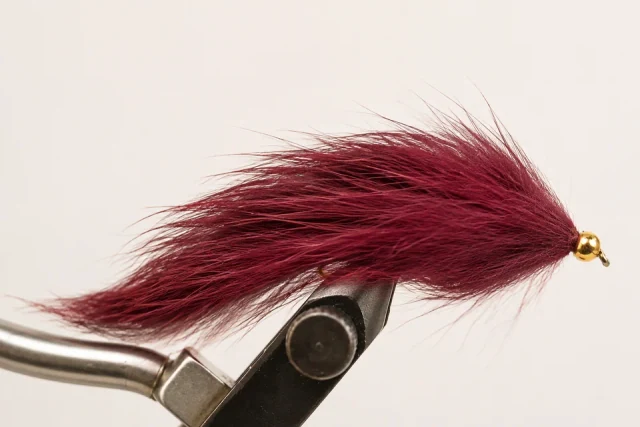
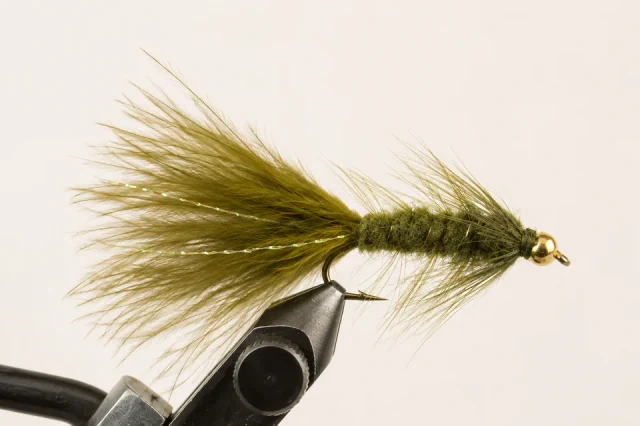
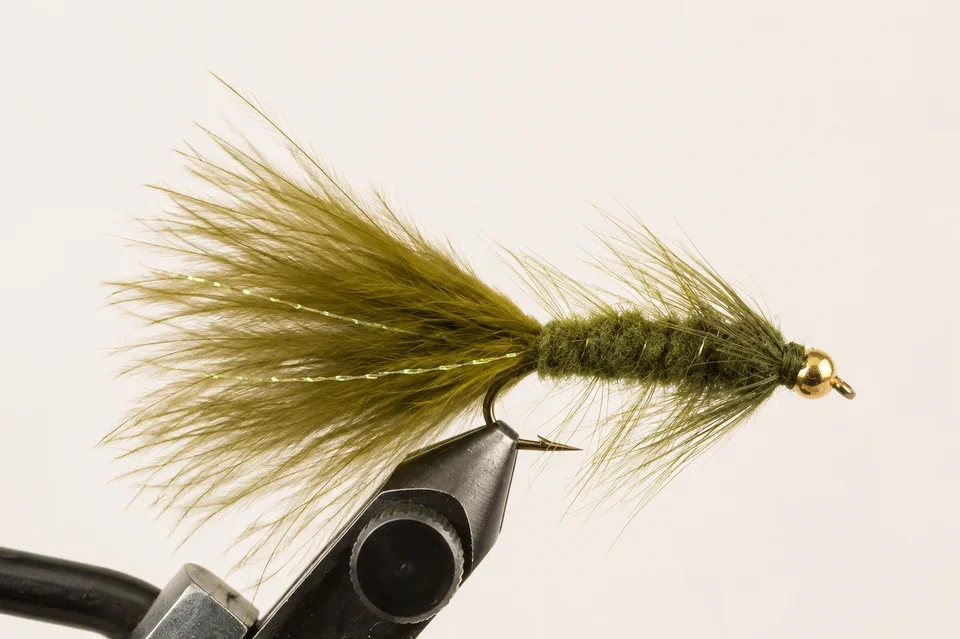
A marabou tail and soft, palmered hackle suggest leeches, baitfish, and larger aquatic food.
- At the vise
- Beginner friendly
- Common sizes
- #4–12
At the vise.
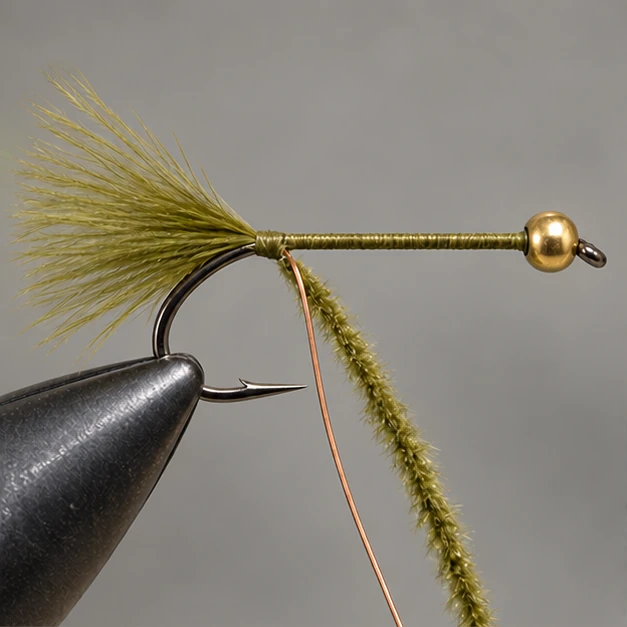
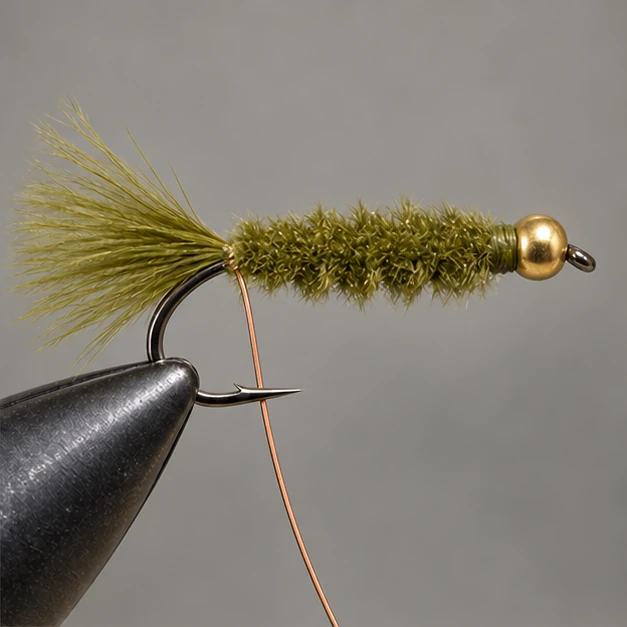
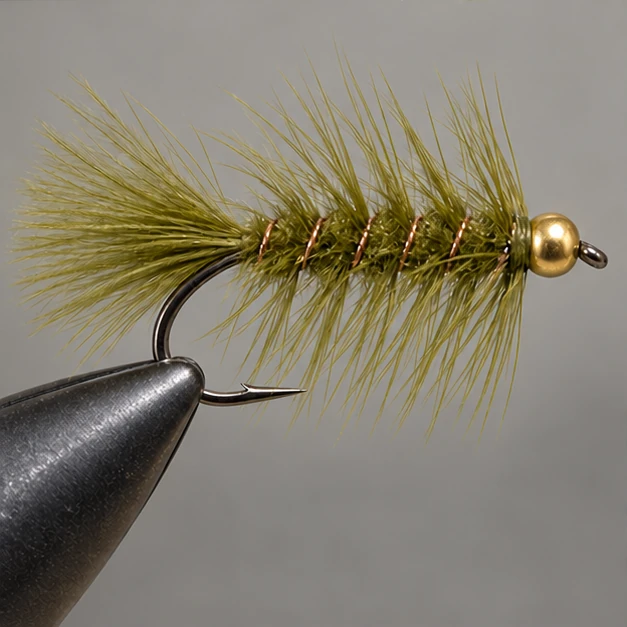
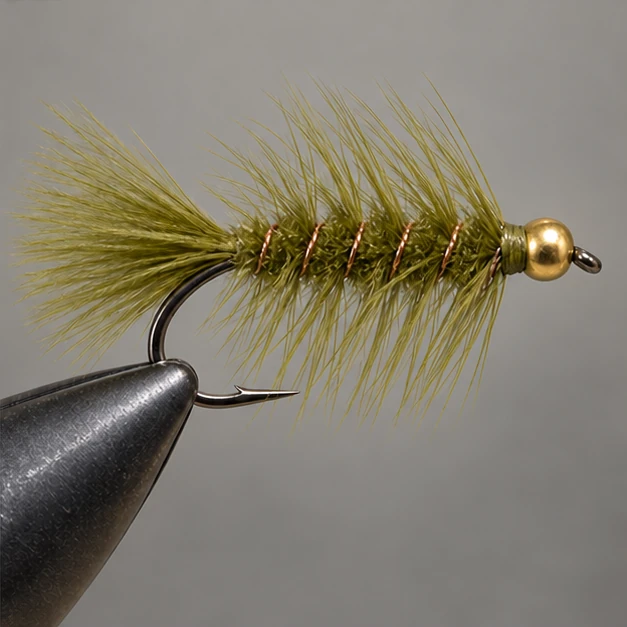
Work through the numbered steps in order. Use the written materials and proportions as your guide; select an image for a closer look.
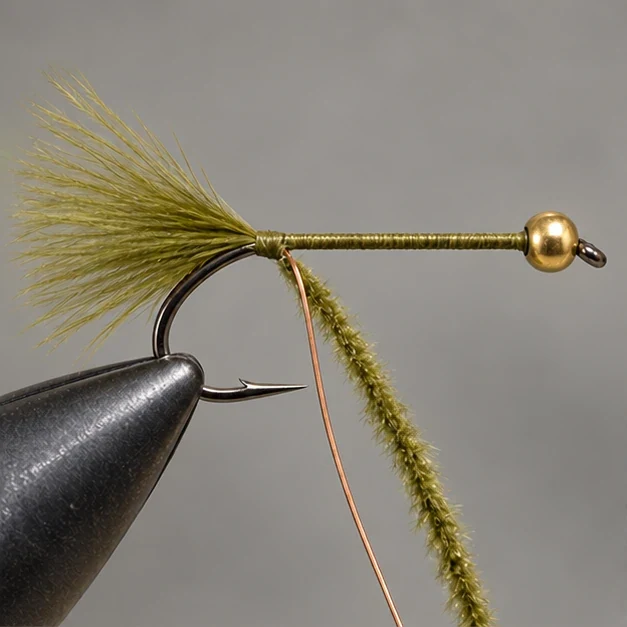
Set the tail
Slide on the bead. Cover the shank with thread; attach a marabou tail about one shank long at the bend. Tie in wire and chenille.
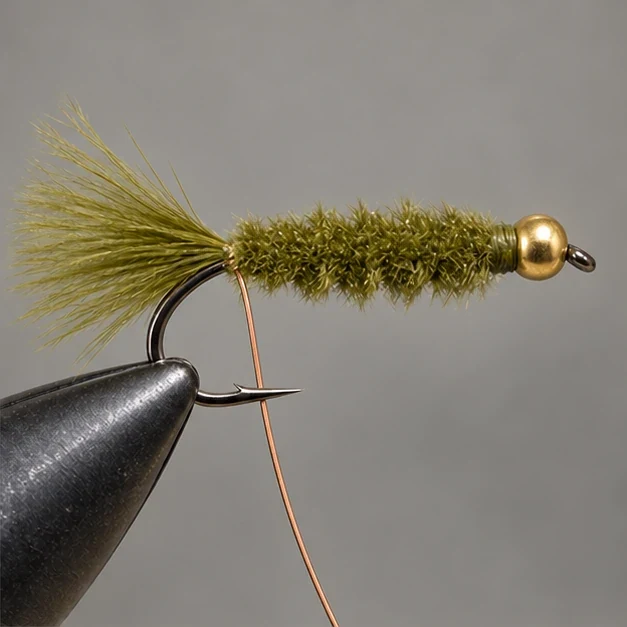
Build the body
Wind chenille forward in touching turns and secure behind the bead.
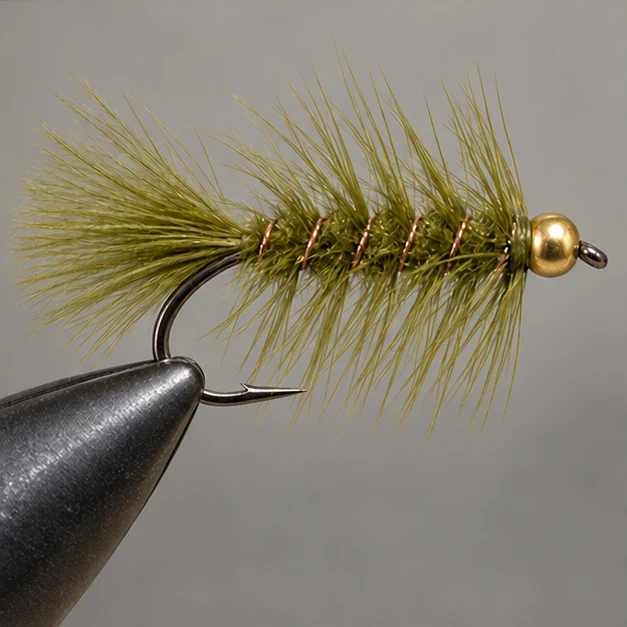
Palmer the hackle
Attach hackle at the front and spiral it back to the tail. Counter-wrap the wire forward through the fibers to secure it.
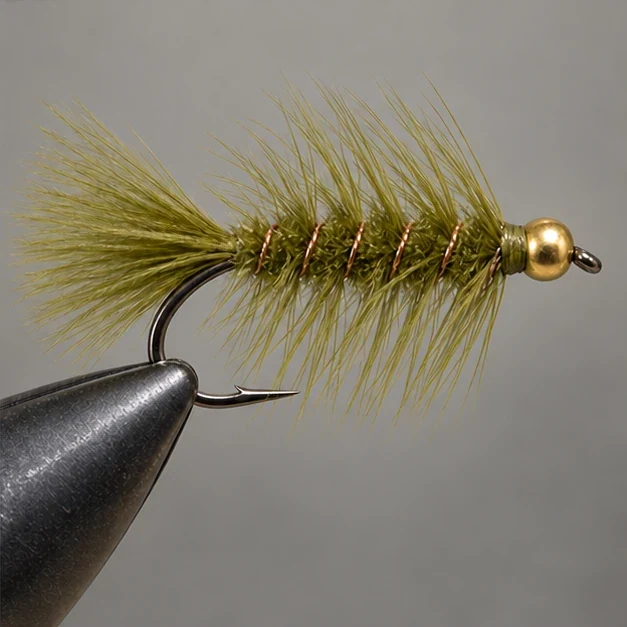
Finish
Trim the wire and hackle excess. Whip finish behind the bead and cement the thread.
On the water.
Strip slowly with pauses, swing across a current, or drift near the bottom. Smaller versions suit panfish; use stronger hooks for steelhead. Compare Woolly Bugger size and weight for smallmouth.
Find your Woolly Bugger.
These tyers list flies based on this pattern. Check each listing for its exact materials, weight, and variations.
 Streamers
Need a different size, color or dressing? Send a tyer a brief with this pattern as the starting point.
Request a custom versionRecipe references
Materials and tying methods may vary between versions. Compare the sources below for this dressing.
Portrait reference
Pattern dressings vary; use the written recipe for exact materials and proportions.