What size and weight Woolly Bugger for smallmouth?
By FlyFysher ·
For a first river fly, start with a size 8 Woolly Bugger and choose its weight for the water. FlyFysher’s documented recipe is an olive, brass-bead size 8. A smaller or larger profile can be useful, but hook number alone does not tell you how quickly the fly sinks.
This is a practical starting specification, not a universal smallmouth size. Tom Rosenbauer’s smallmouth guidance emphasizes water type and the pause after a strip; Captain Drew Price describes carrying different Bugger weights to cover different depths. FlyFysher has not field-tested these variants.
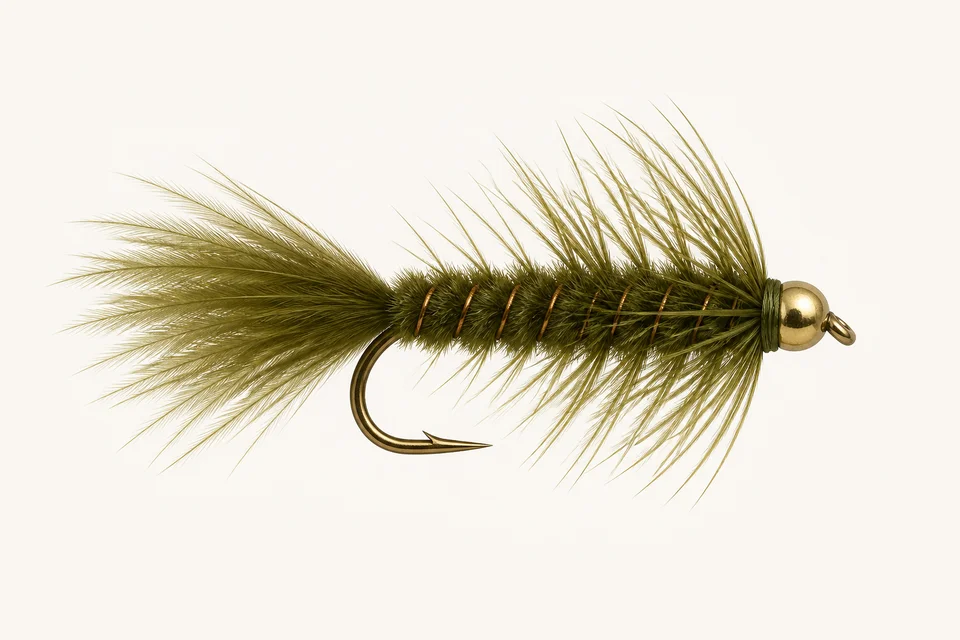
Choose weight by depth and current
| Dressing | Where to try it | What to check |
|---|---|---|
| No added weight | Shallower or slower water when a slower descent helps keep the fly above the bottom. | It may ride too high in a deep or fast lane. |
| Brass bead | A middle starting point; the linked FlyFysher size 8 recipe specifies this dressing. | Watch the fly during a pause and adjust the rig if it never reaches the fish. |
| Cone head or wire-weighted bead | Deeper or quicker water when the fly needs to reach the target lane sooner. | It can be excessive in skinny water and changes casting and descent. |
Rosenbauer recommends a cone-head Bugger for smallmouth and notes that a strip followed by a longer pause works well with a weighted fly. Tim Flagler’s bead-head tying instructions use both a bead and lead-free wire; that is heavier than FlyFysher’s bead-only recipe. Ask a tyer to state bead or cone material and any shank wire instead of ordering by “heavy” alone.
Use the retrieve to test the choice
- Cast to a likely seam, eddy, or pool edge and let the fly reach the chosen lane.
- Make a short strip, then allow a distinct pause. Watch the line for a take while the fly drops.
- If the fly stays too high, change weight or depth. If it hangs up continuously, reduce weight or change the lane.
Those are starting checks derived from Rosenbauer’s described smallmouth presentation. Current, line density, and bottom shape can change the result, so confirm the dressing on your water.
A useful request for a tyer
“Olive Woolly Bugger, size 8, brass bead, no extra shank wire” is a testable starting specification. Add your water depth, current, hook preference, and whether you want an unweighted or deeper-running companion.
See the Woolly Bugger recipe · Check currently associated tyer listings
A recipe is an example dressing. Check any listing for its actual size, weight, and availability.