FlyFysher
Stimulator
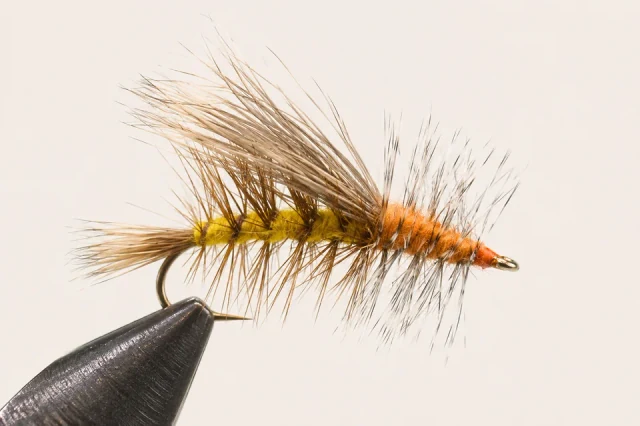
Elk hair and two hackles make a visible searching dry for stonefly and caddis water.
- At the vise
- Intermediate
- Common sizes
- #6–16
At the vise.
Work through the numbered steps in order. Use the written materials and proportions as your guide; select an image for a closer look.
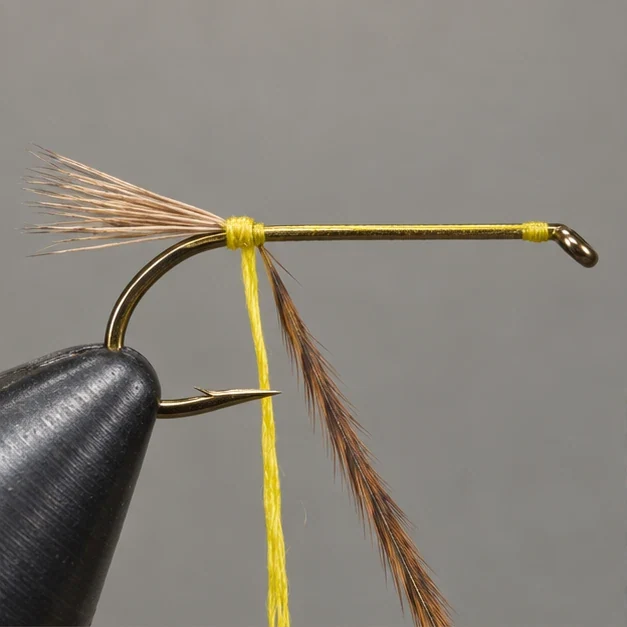
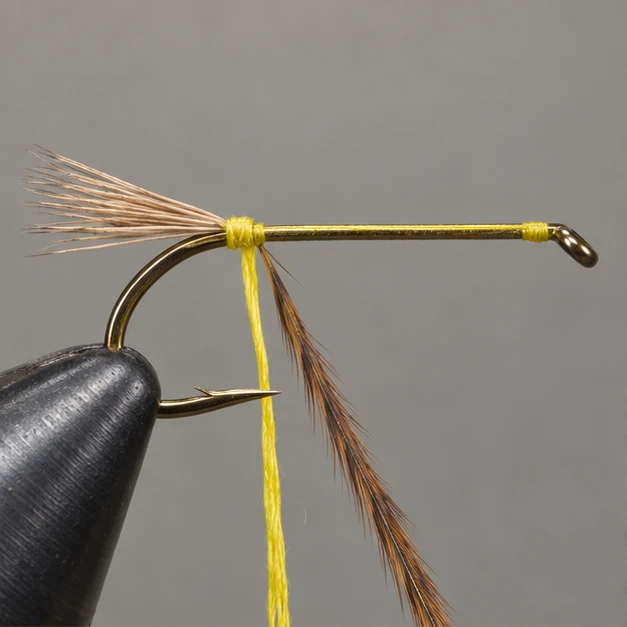
Set the tail
Attach a short stacked elk-hair tail at the bend. Secure floss and brown hackle there.
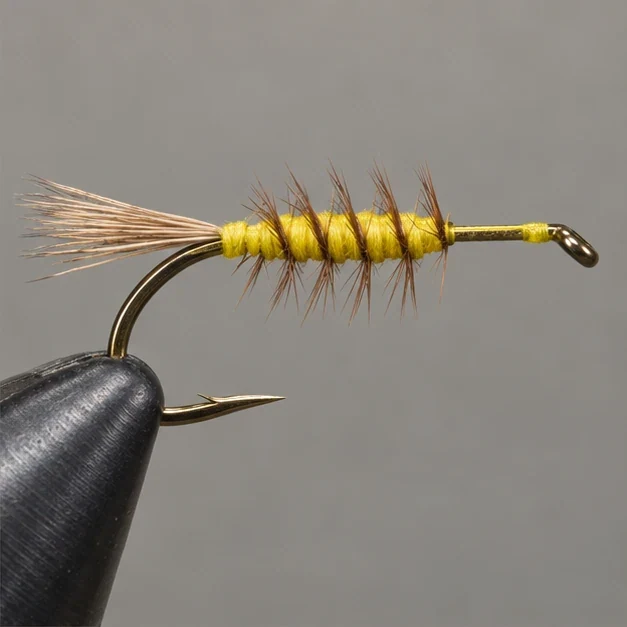
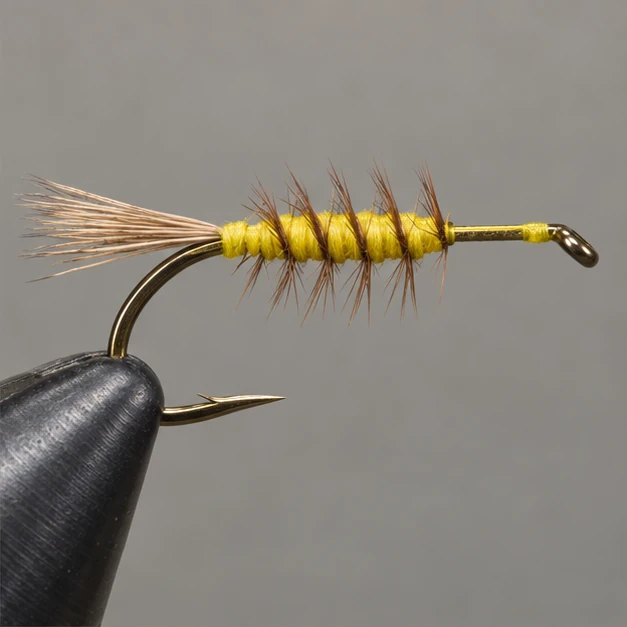
Wrap the abdomen
Wind floss over the rear two-thirds of the shank. Spiral the brown hackle forward and tie off.
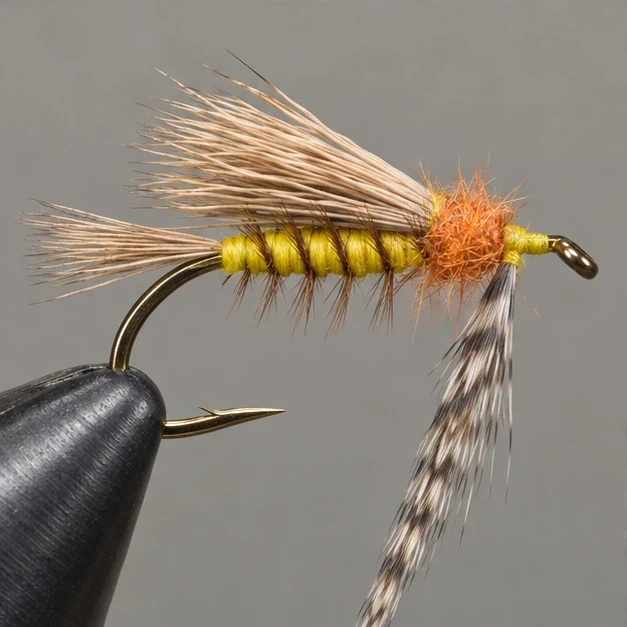
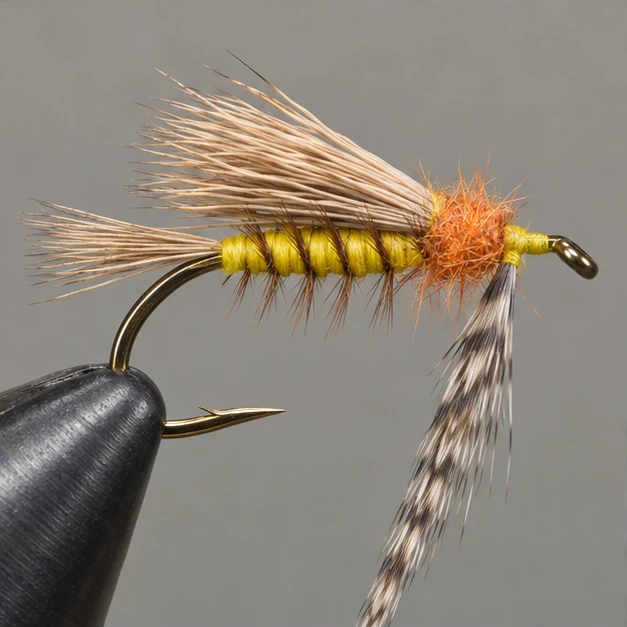
Add wing and thorax
Tie a stacked elk wing over the abdomen with tips near the tail base. Trim butts. Attach grizzly hackle and dub the orange thorax.
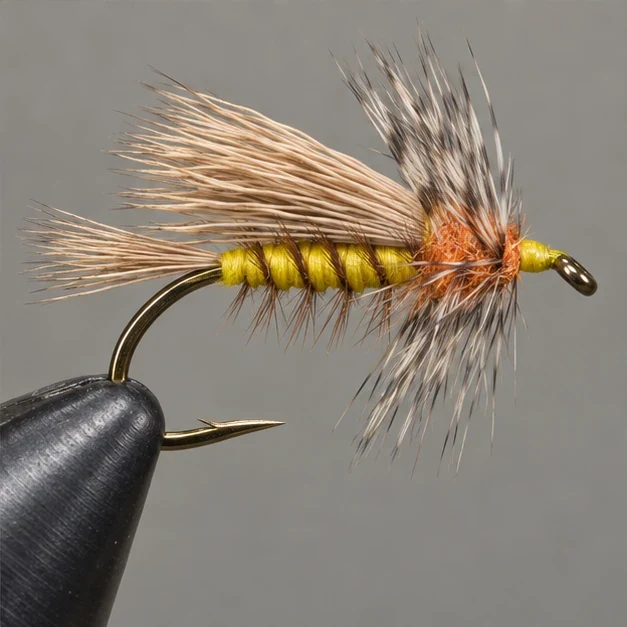
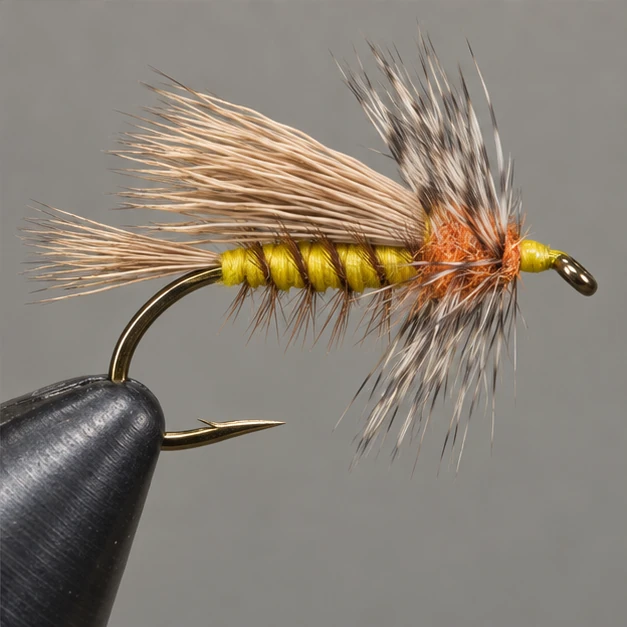
Hackle and finish
Wind grizzly hackle over the thorax. Secure, whip finish, and cement the head.
On the water.
Dead-drift through riffles and pocket water. Match size and color to local stoneflies or caddis; keep the front eye clear.
Find your Stimulator.
Have this pattern tied for your water.
No versions are listed yet. Choose a tyer and ask about your sizes, colors and materials. The tyer must confirm availability and send an offer.
Recipe references
Materials and tying methods may vary between versions. Compare the sources below for this dressing.
Portrait reference
Pattern dressings vary; use the written recipe for exact materials and proportions.