FlyFysher
Adams
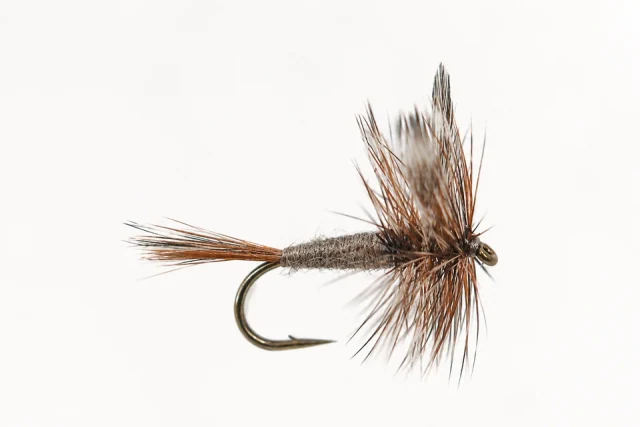
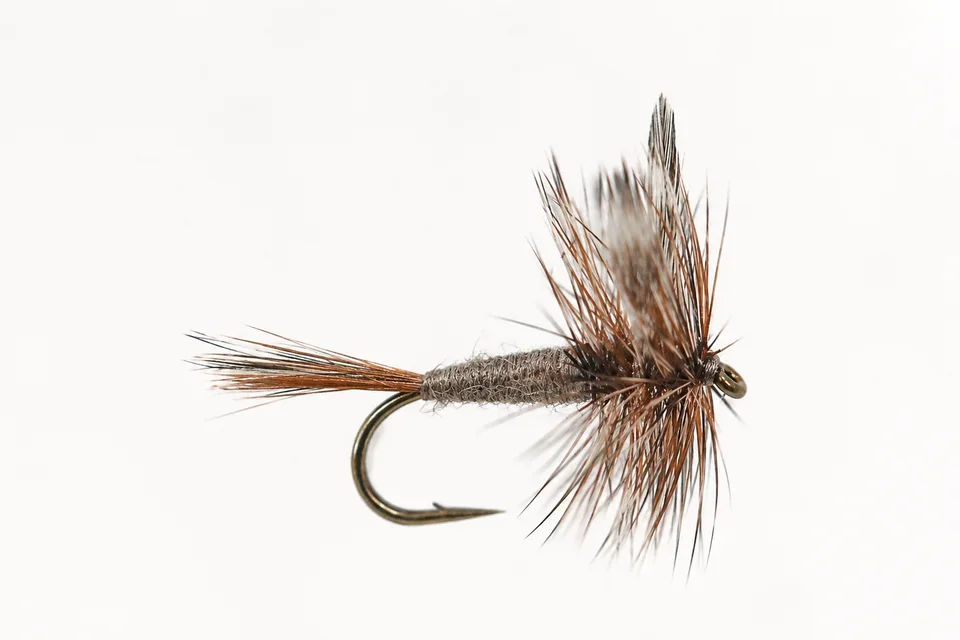
Upright feather wings, mixed hackle, and a gray body form a classic mayfly silhouette.
- At the vise
- Intermediate
- Common sizes
- #12–22
At the vise.
Work through the numbered steps in order. Use the written materials and proportions as your guide; select an image for a closer look.
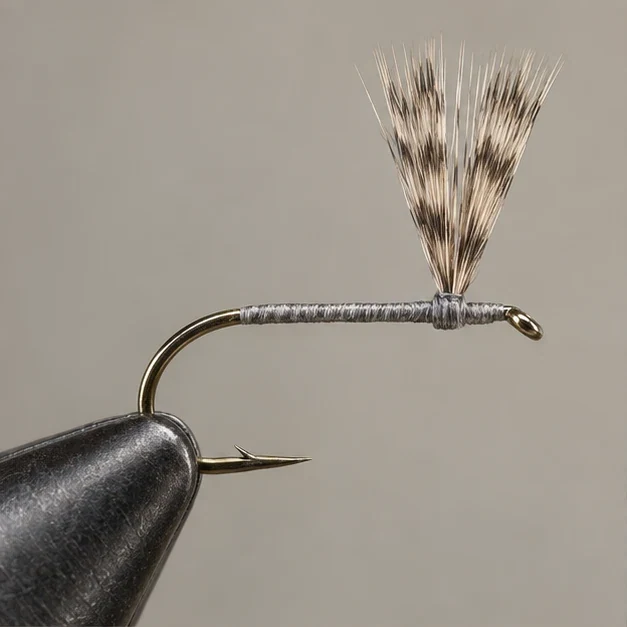
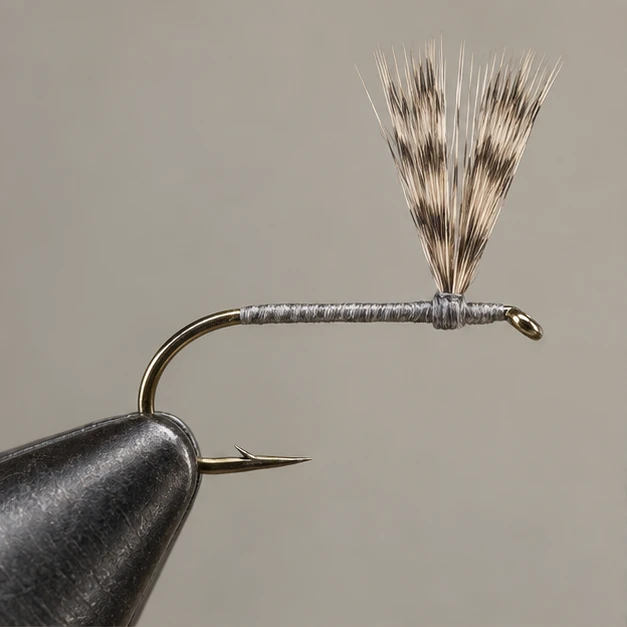
Raise the wings
Tie paired hackle tips near the front third, about one shank long. Lift and divide them with thread wraps.
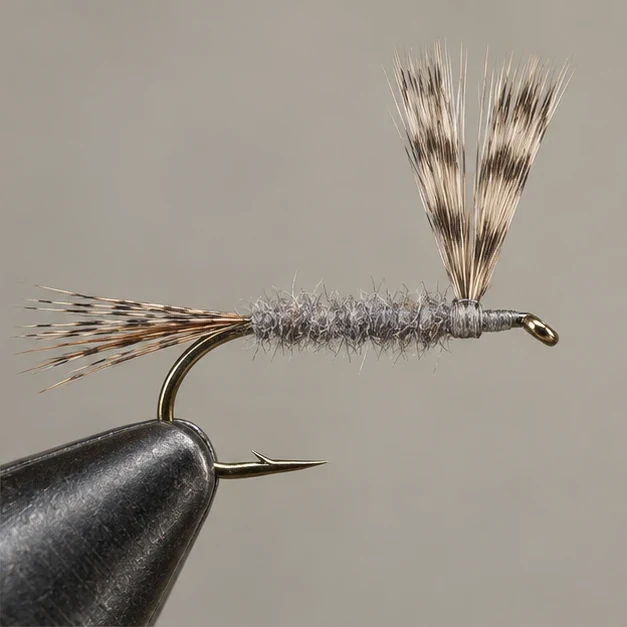
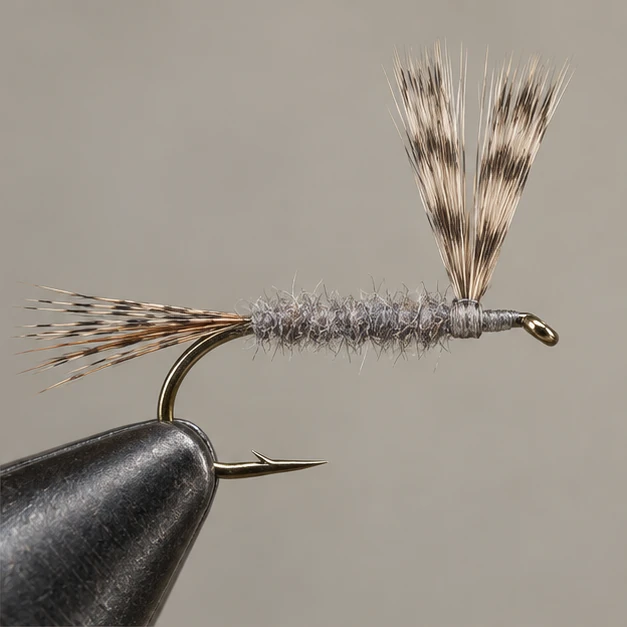
Tail and body
Attach a sparse mixed-hackle tail at the bend. Dub a thin gray abdomen forward to the wings.
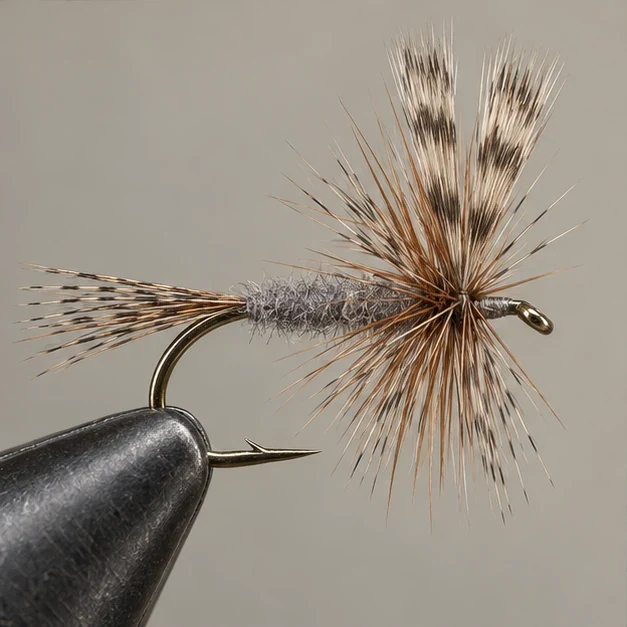
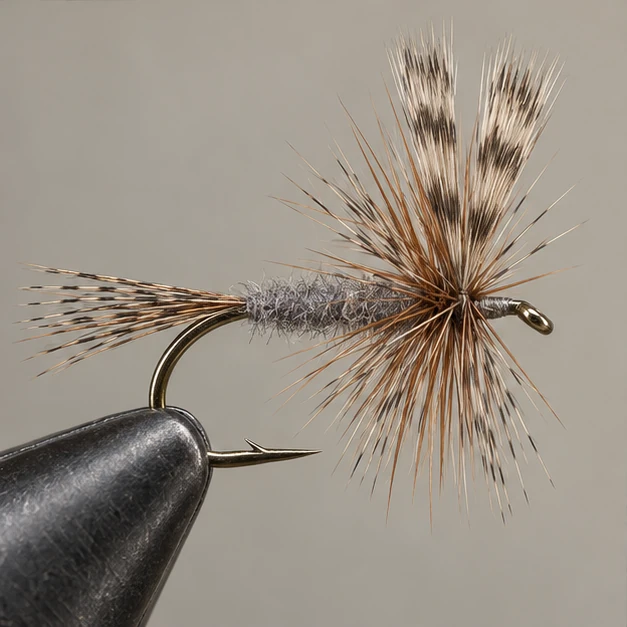
Hackle
Attach both hackles behind the wings. Wind several turns behind and ahead, keeping the wings separated.
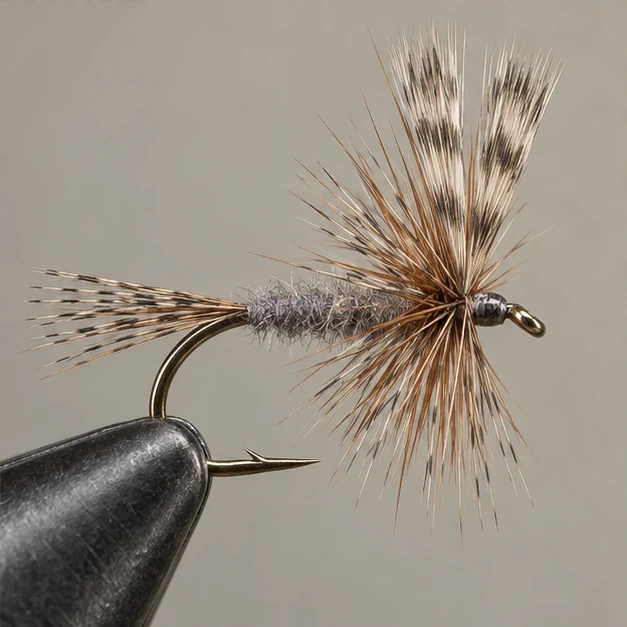
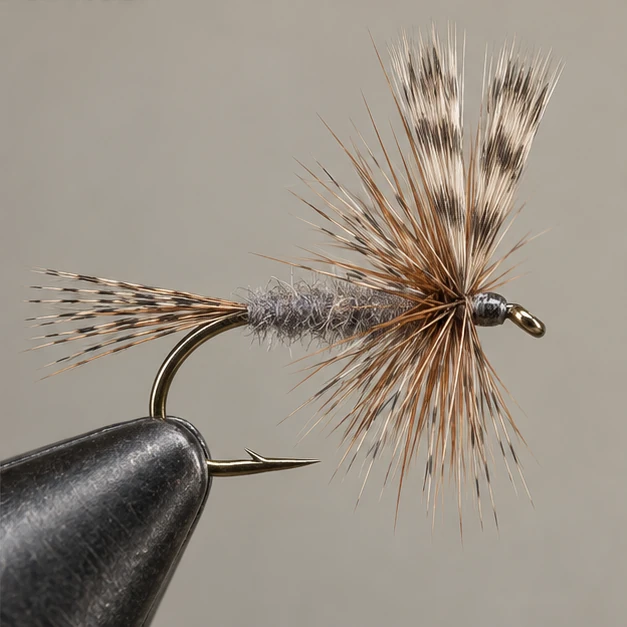
Finish
Secure and trim the hackles, whip finish, and cement the head without trapping fibers in the eye.
On the water.
Dead-drift to rising trout when a general mayfly profile fits the hatch. Unlike the Parachute Adams, this version has upright wings and conventional hackle.
Find your Adams.
These tyers list flies based on this pattern. Check each listing for its exact materials, weight, and variations.
 Dry flies
Need a different size, color or dressing? Send a tyer a brief with this pattern as the starting point.
Request a custom versionRecipe references
Materials and tying methods may vary between versions. Compare the sources below for this dressing.
Portrait reference
Pattern dressings vary; use the written recipe for exact materials and proportions.
Adams Dry Flies / Dry Fly For Trout Fly Fishing - The Fly Crate ↗