FlyFysher
Perdigon
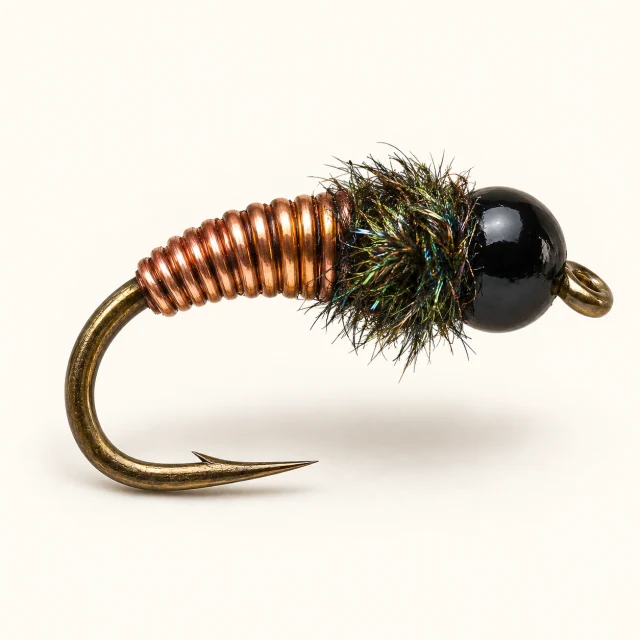
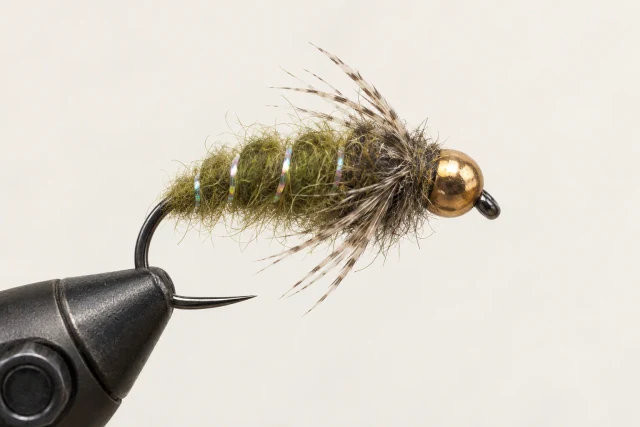
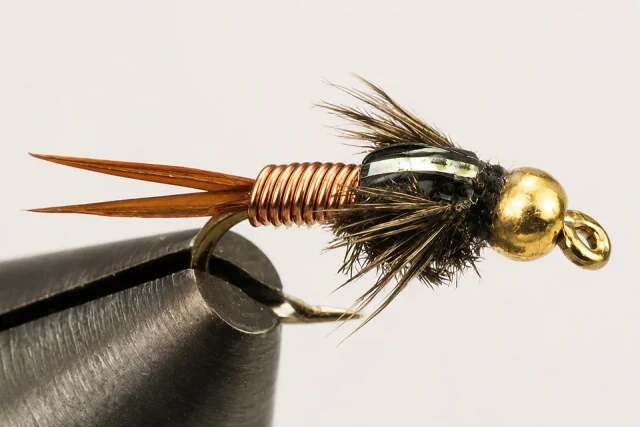
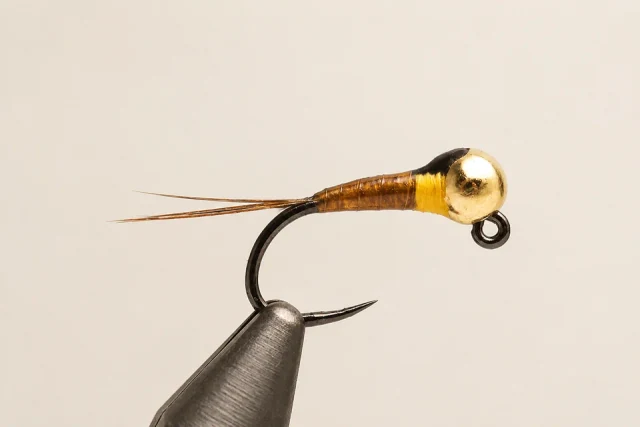
A smooth, resin-coated nymph with little bulk for reaching depth in current.
- At the vise
- Intermediate
- Common sizes
- #14–20
At the vise.
Work through the numbered steps in order. Use the written materials and proportions as your guide; select an image for a closer look.
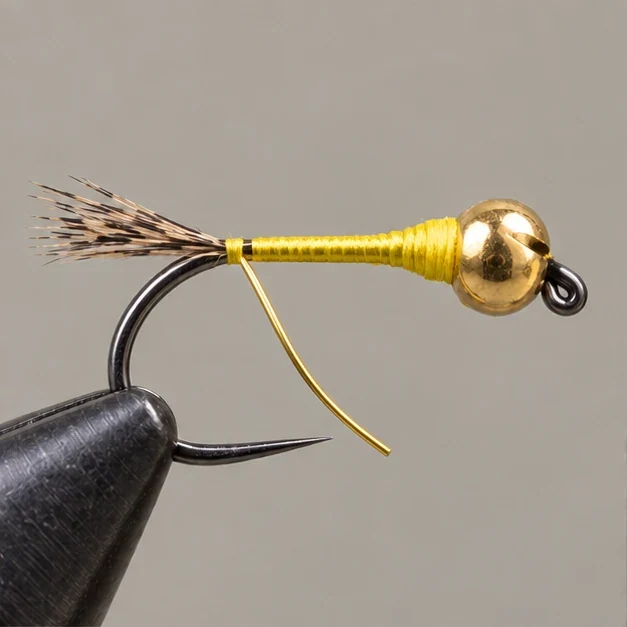
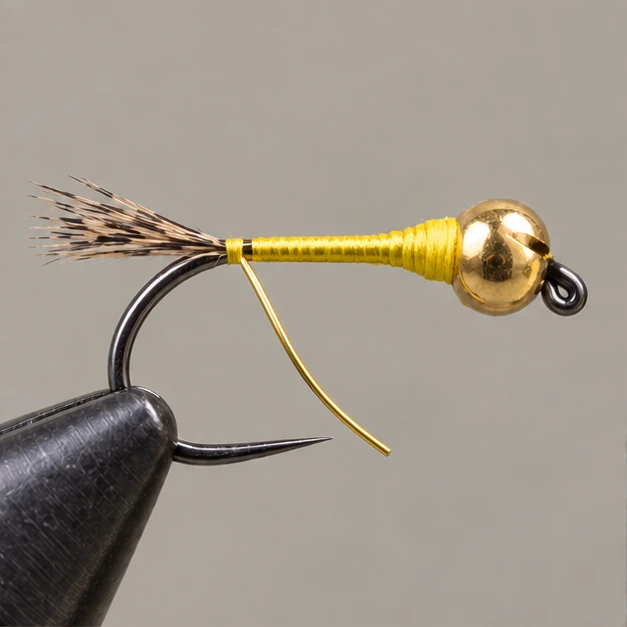
Weight and tail
Seat the bead with a few wire wraps and thread. Tie a short wood-duck tail and gold wire at the bend.
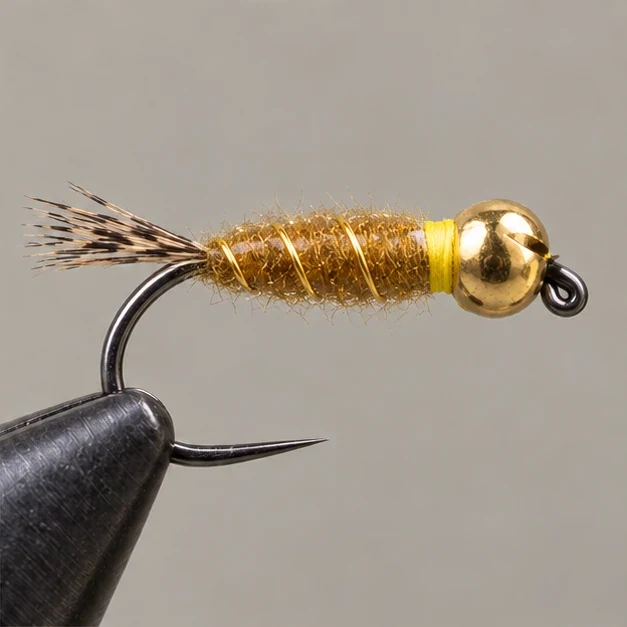
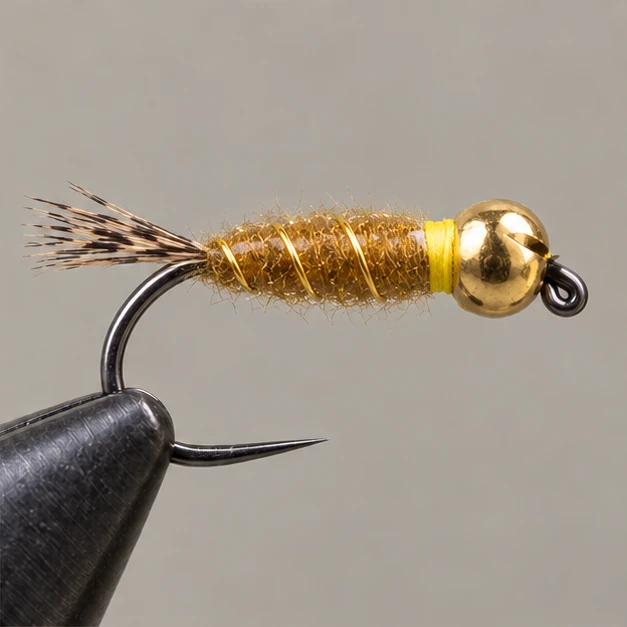
Slender body
Tie in a thin strand of Antron. Wrap a tapered abdomen, then spiral the gold wire forward and secure.
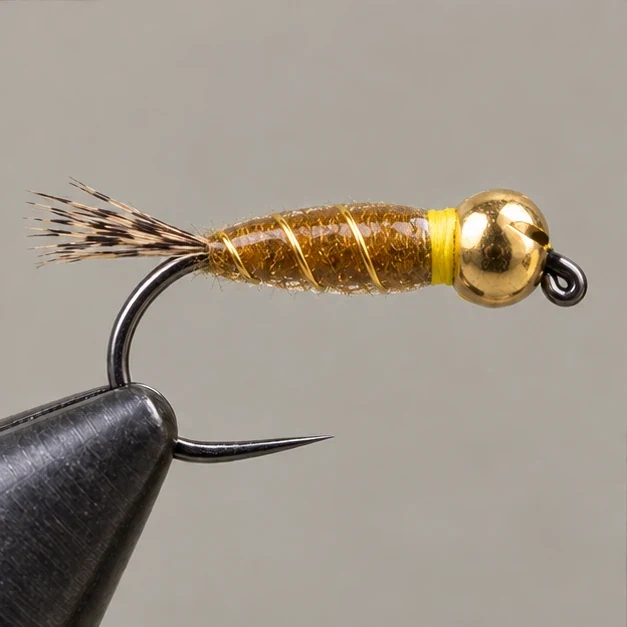
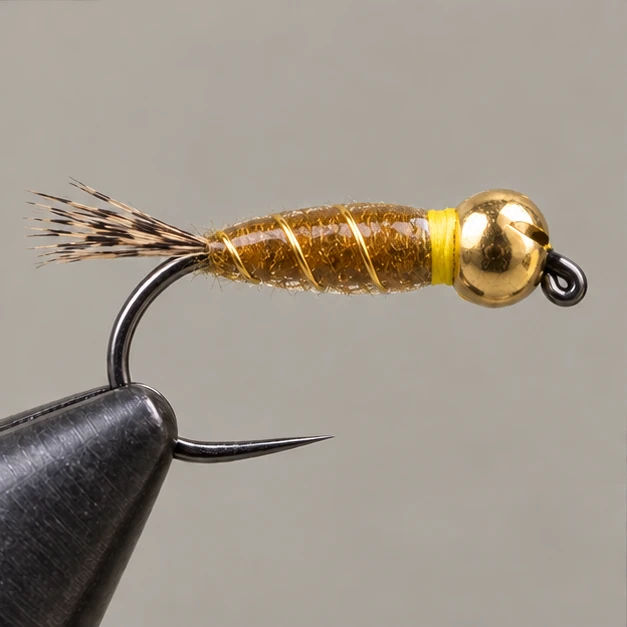
Shape and seal
Whip finish. Coat the body sparingly with clear resin, keeping the hook gap open, and cure fully.
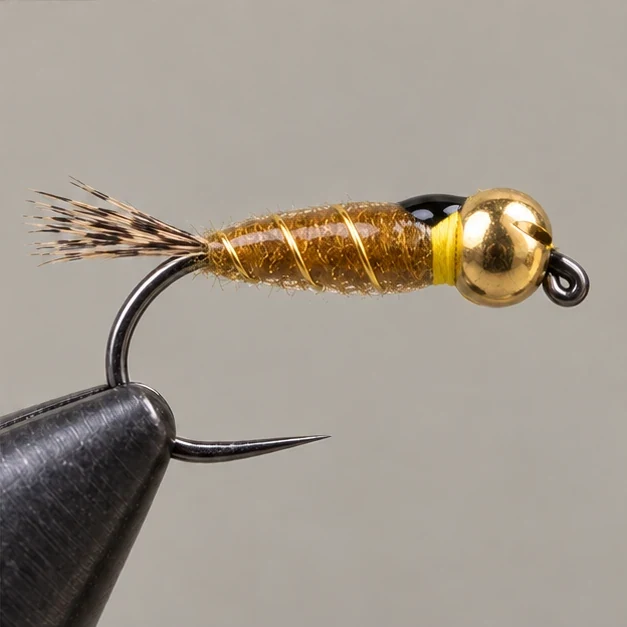
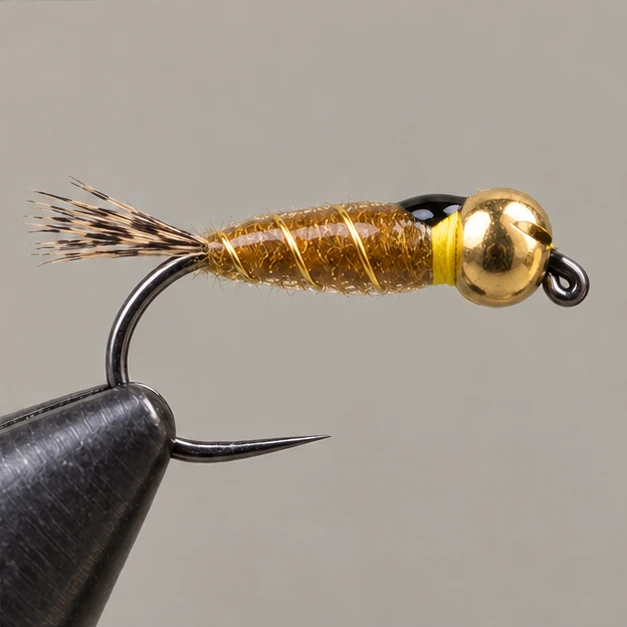
Wingcase
Add a small black resin spot behind the bead. Cure it, then seal with a thin clear coat and cure again.
On the water.
Dead-drift near the bottom with a controlled leader. Change bead weight before increasing body bulk.
Find your Perdigon.
Have this pattern tied for your water.
No versions are listed yet. Choose a tyer and ask about your sizes, colors and materials. The tyer must confirm availability and send an offer.
Recipe references
Materials and tying methods may vary between versions. Compare the sources below for this dressing.
Portrait reference
Pattern dressings vary; use the written recipe for exact materials and proportions.