FlyFysher
Parachute Adams
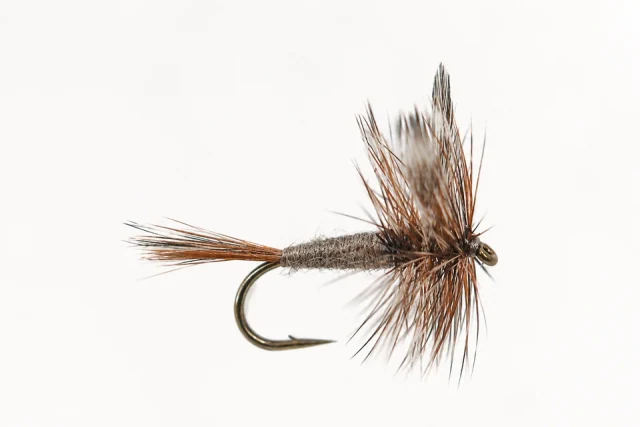
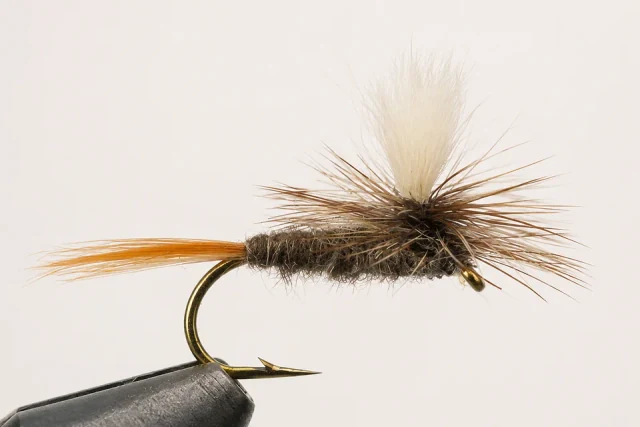
A gray mayfly profile with an upright white post for tracking the drift.
- At the vise
- Intermediate
- Common sizes
- #12–22
At the vise.
Work through the numbered steps in order. Use the written materials and proportions as your guide; select an image for a closer look.
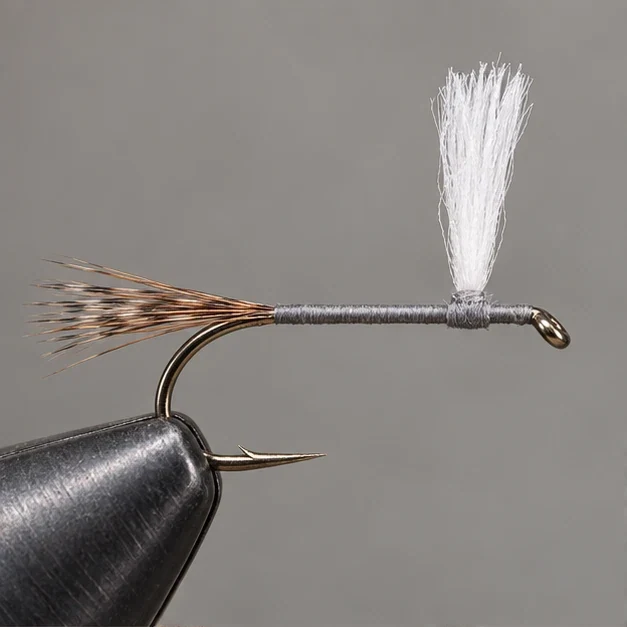
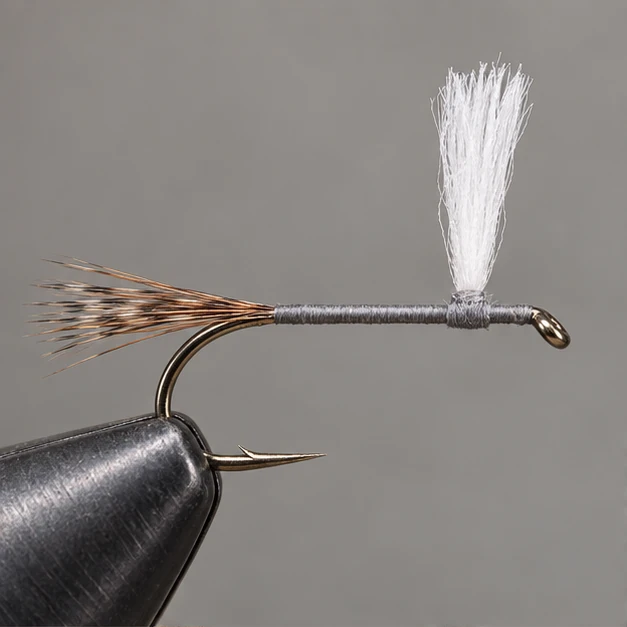
Tail and post
Tie a mixed-fiber tail one shank long. Attach yarn near the front third, lift it upright, and wrap thread around its base.
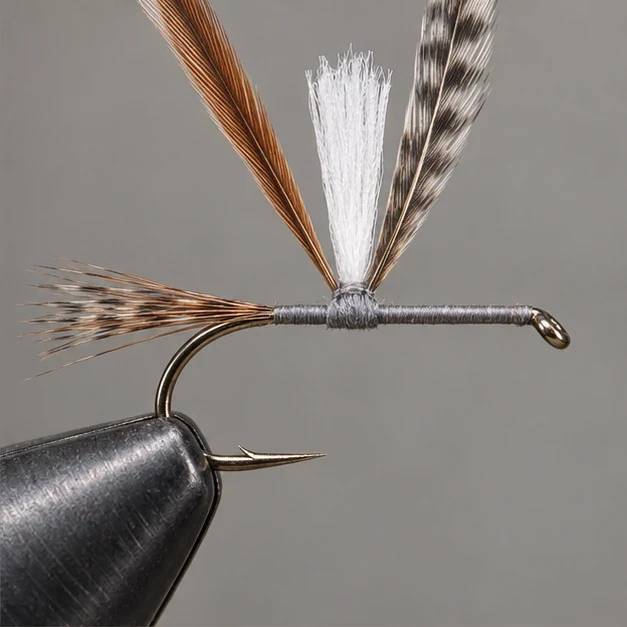
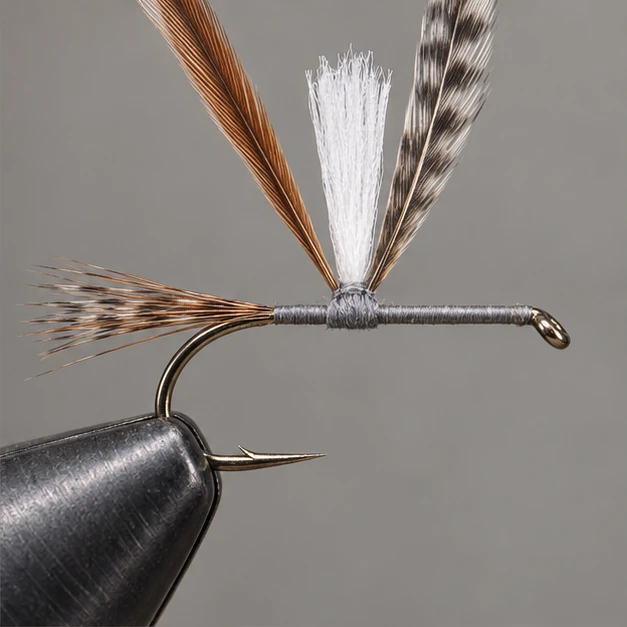
Prepare hackle
Tie both hackles beside the post with bare stems upright. Bind the stems against the post.
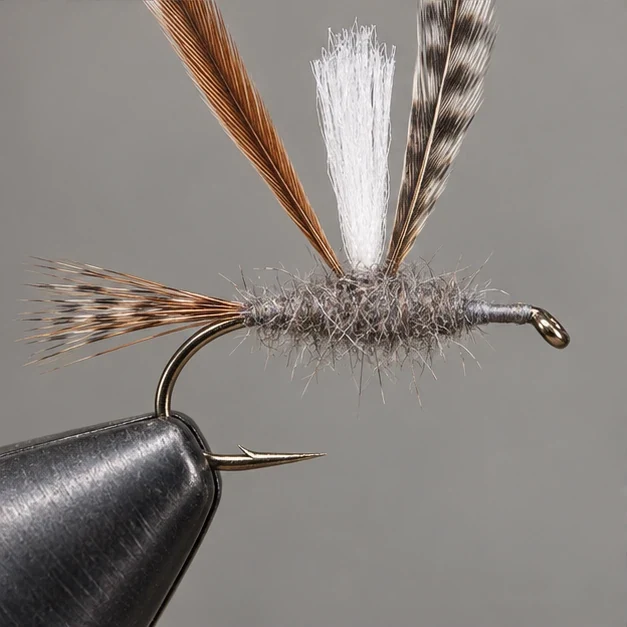
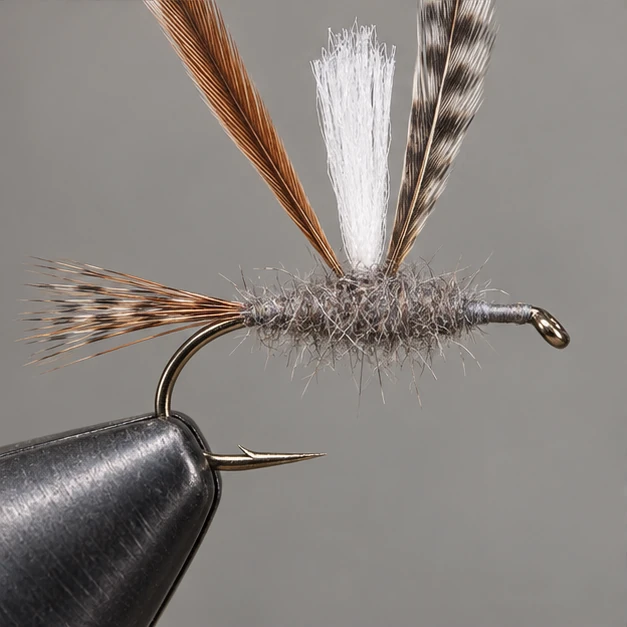
Dub the body
Form a slim dubbed abdomen and thorax, leaving the eye clear.
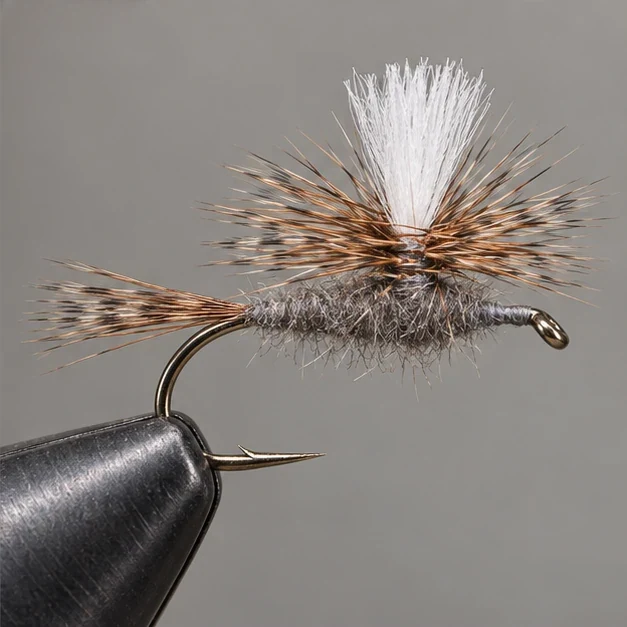
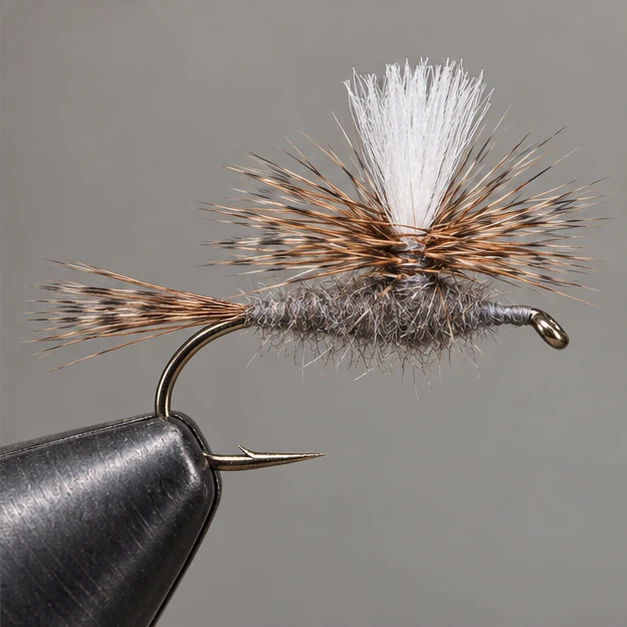
Wrap the parachute
Wind both hackles horizontally down the post. Secure beneath the lowest turns, whip finish, trim, and cement the thread.
On the water.
Use a drag-free drift when trout rise to mayflies. Let the natural insect determine the size.
Find your Parachute Adams.
Have this pattern tied for your water.
No versions are listed yet. Choose a tyer and ask about your sizes, colors and materials. The tyer must confirm availability and send an offer.
Recipe references
Materials and tying methods may vary between versions. Compare the sources below for this dressing.
Portrait reference
Pattern dressings vary; use the written recipe for exact materials and proportions.