FlyFysher
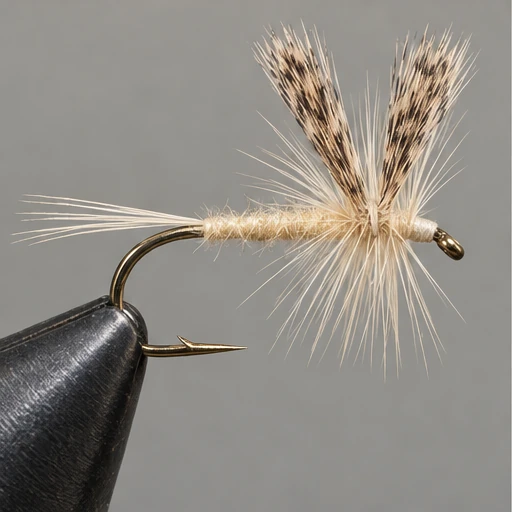
Light Cahill
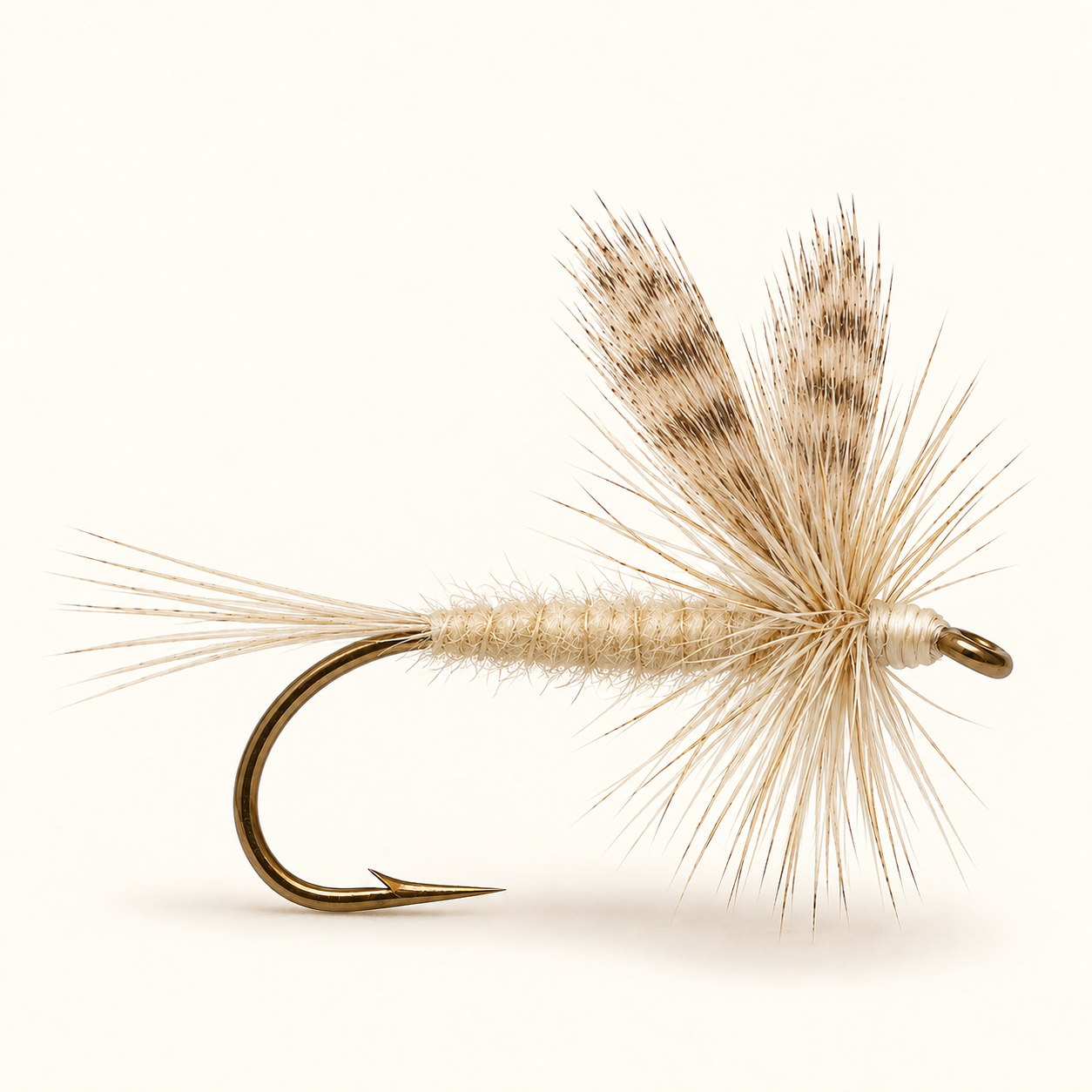
A pale Catskill dry fly with divided wood-duck wings and cream hackle.
Keep this traditional mayfly dressing light and balanced.
- At the vise
- Intermediate
- Common sizes
- #10–18
At the vise.
Work through the numbered steps in order. Use the written materials and proportions as your guide; select an image for a closer look.
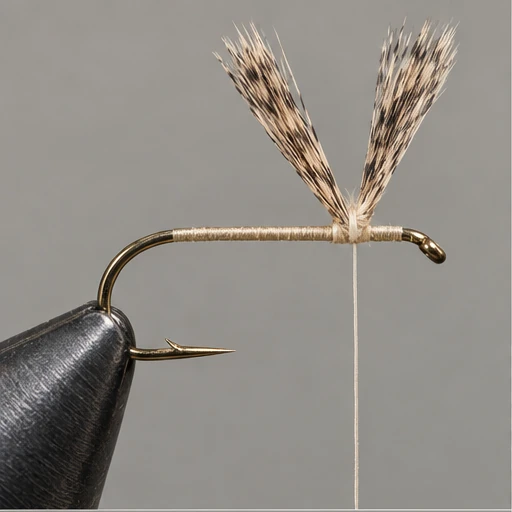
Divide the wings
Secure aligned wood-duck fibers near the front third. Raise them, divide equally, and figure-eight the bases to hold them apart.
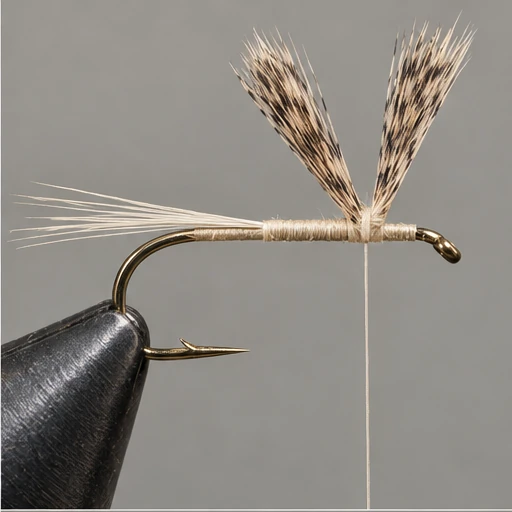
Set the tail
Tie cream hackle fibers along the top of the shank, extending about a hook-length beyond the bend.
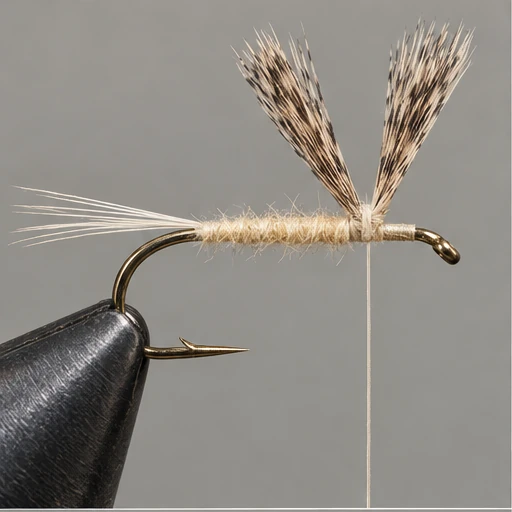
Dub sparingly
Wind a thin cream dubbed body forward from the tail, leaving space behind the wings.
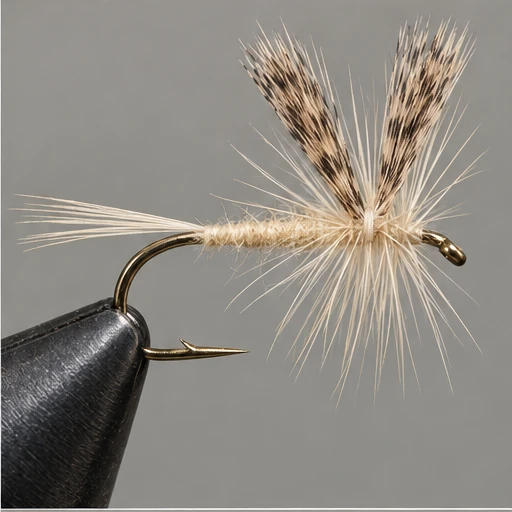
Wrap the hackle
Secure a prepared cream feather and wind several turns behind and ahead of the wings without trapping them.
Finish the head
Tie off the feather, trim its stem, and whip finish a compact head. Cement the knot without blocking the eye.
On the water.
Try it when trout take pale mayflies on the surface.
Find your Light Cahill.
Have this pattern tied for your water.
No versions are listed yet. Choose a tyer and ask about your sizes, colors and materials. The tyer must confirm availability and send an offer.
Recipe references
Original written instructions adapted from the sources below. Materials and methods may vary between versions.
Portrait reference
Pattern dressings vary; use the written recipe for exact materials and proportions.