FlyFysher
Humpy
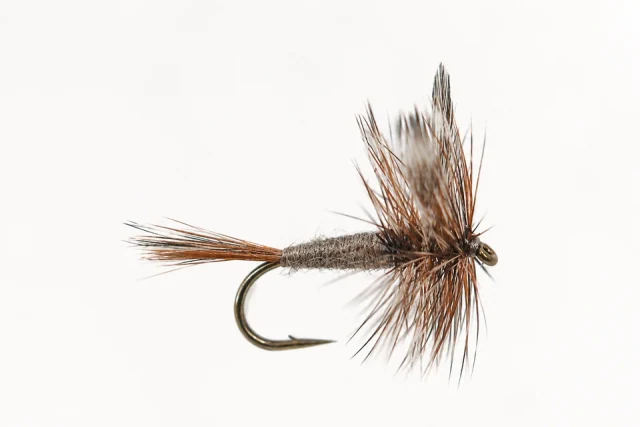
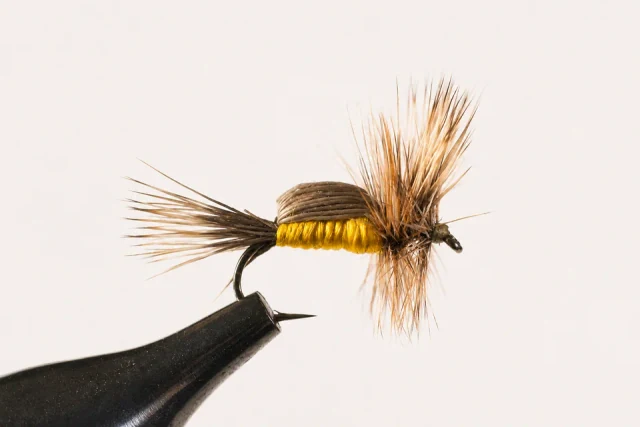
A buoyant hair back and upright hair wings make a visible rough-water attractor.
- At the vise
- Advanced
- Common sizes
- #10–18
At the vise.
Work through the numbered steps in order. Use the written materials and proportions as your guide; select an image for a closer look.
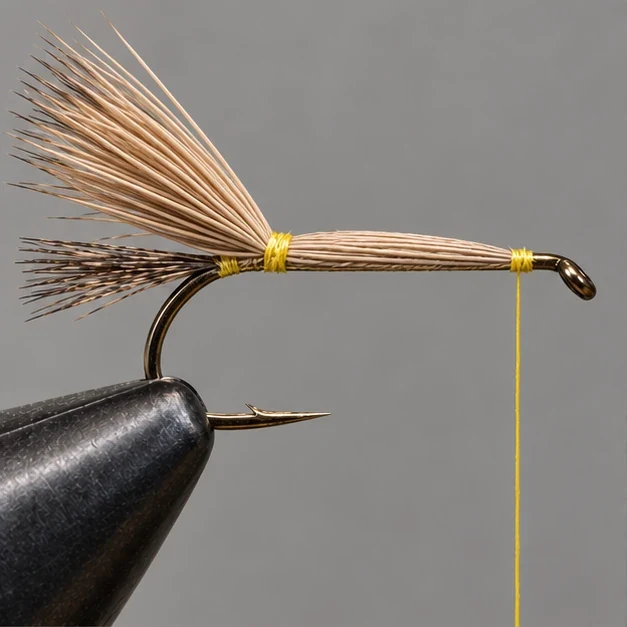
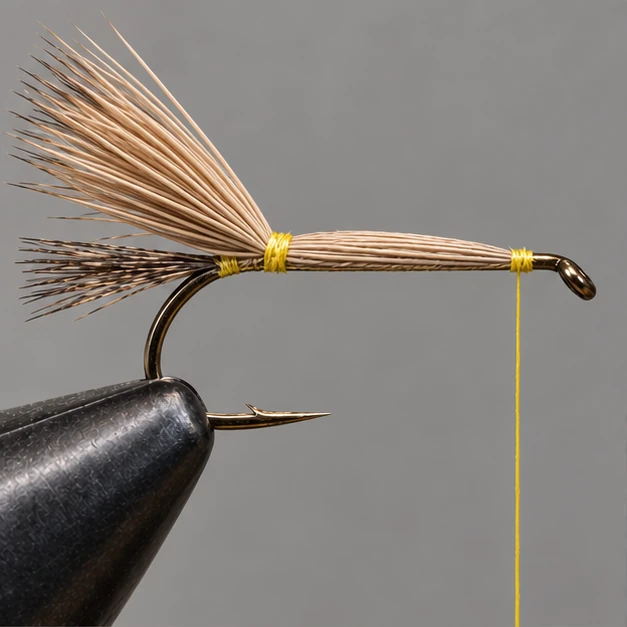
Tail and back
Tie a short moose-hair tail. Bind an elk bunch at the bend with tips rearward; retain enough length for the folded back and upright wings.
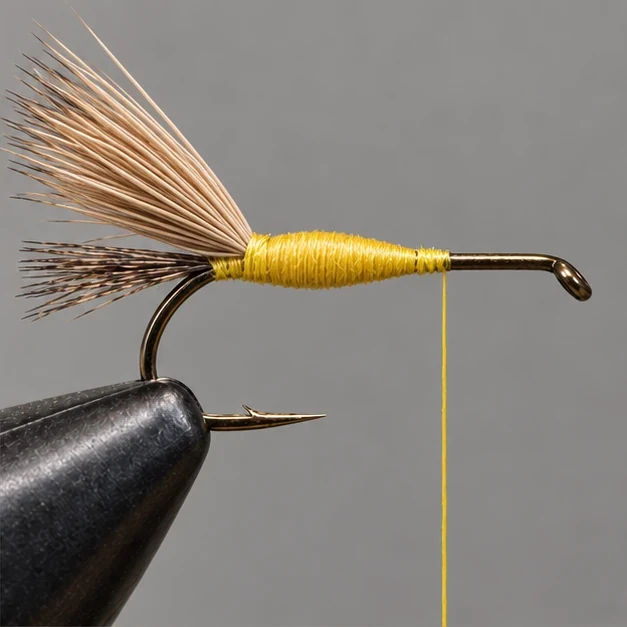
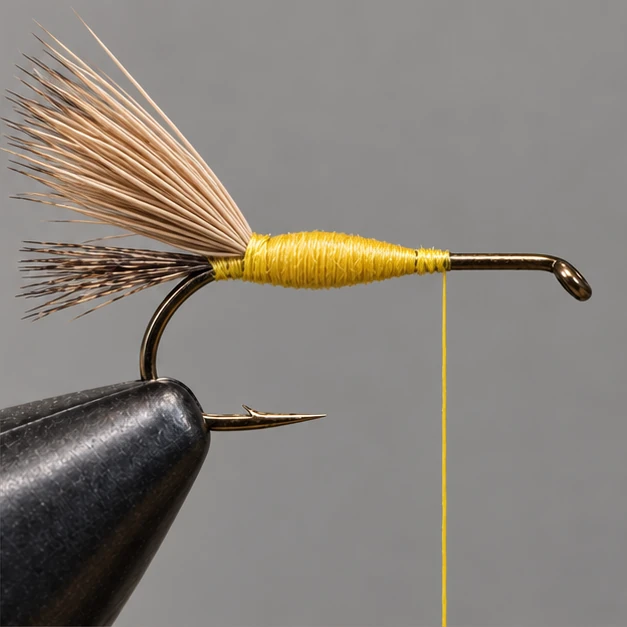
Yellow belly
Cover the hair butts with smooth yellow thread, forming the abdomen.
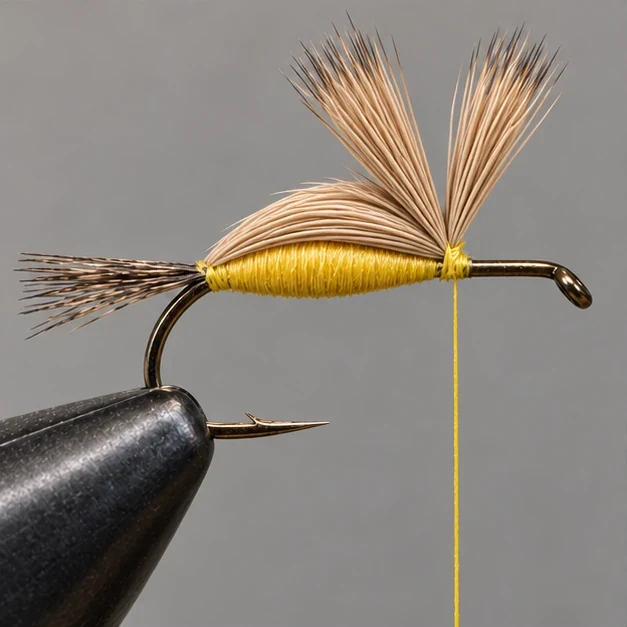
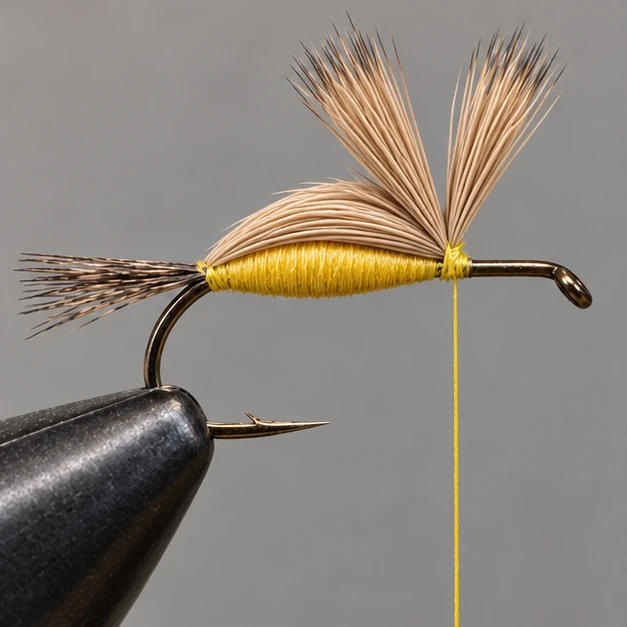
Fold and divide
Pull the elk forward over the abdomen and secure at the front third. Raise the remaining tips and divide into two wings.
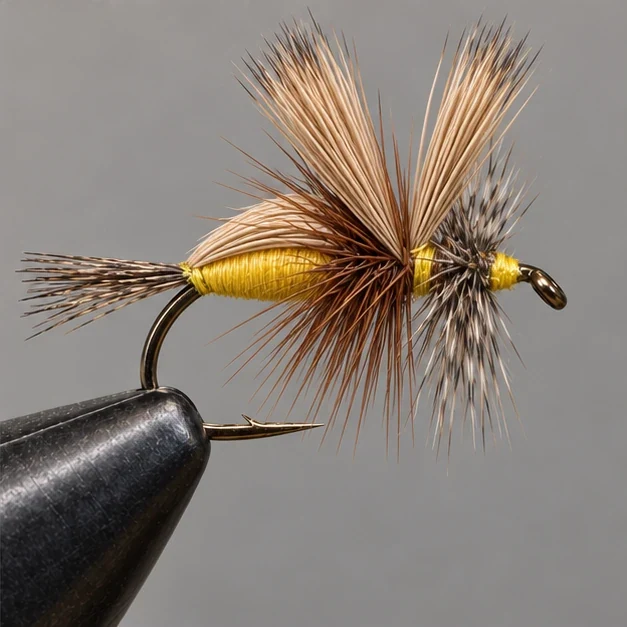
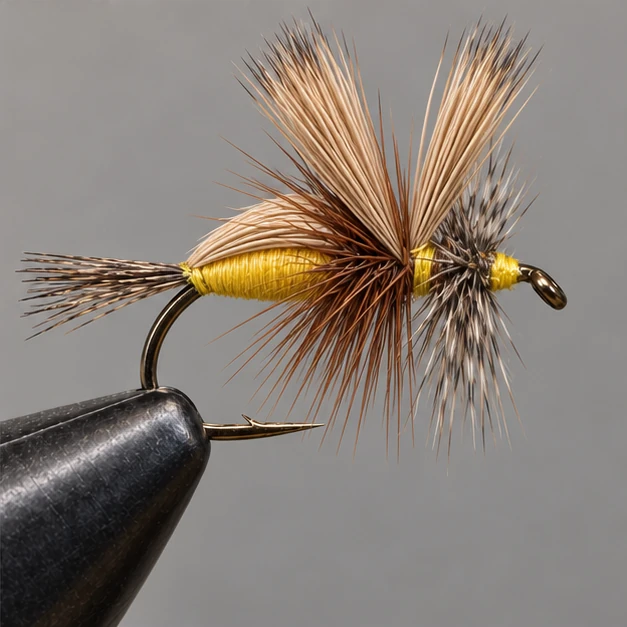
Hackle and finish
Wind brown and grizzly hackles behind and ahead of the wings. Secure, trim, whip finish, and cement.
On the water.
Prospect riffles and broken currents. Keep the hair body compact and symmetrical to reduce spinning while casting.
Find your Humpy.
Have this pattern tied for your water.
No versions are listed yet. Choose a tyer and ask about your sizes, colors and materials. The tyer must confirm availability and send an offer.
Recipe references
Materials and tying methods may vary between versions. Compare the sources below for this dressing.
Portrait reference
Pattern dressings vary; use the written recipe for exact materials and proportions.