FlyFysher
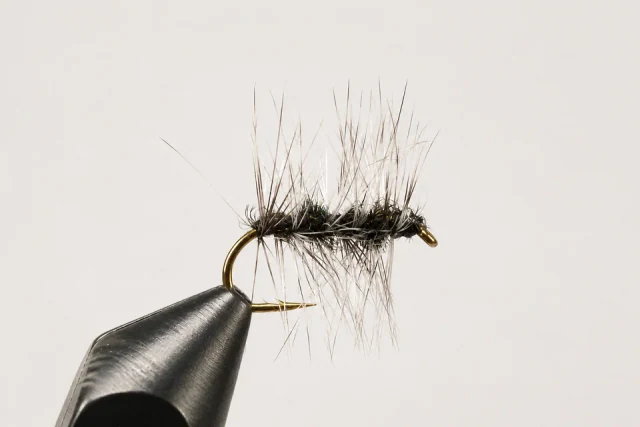
Griffith’s Gnat
Peacock and grizzly hackle make a small surface pattern for midge activity.
- At the vise
- Beginner friendly
- Common sizes
- #16–24
At the vise.
Work through the numbered steps in order. Use the written materials and proportions as your guide; select an image for a closer look.
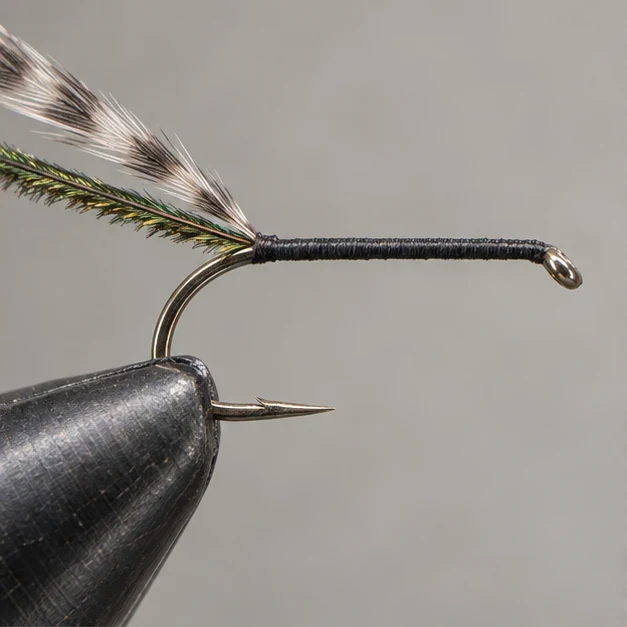
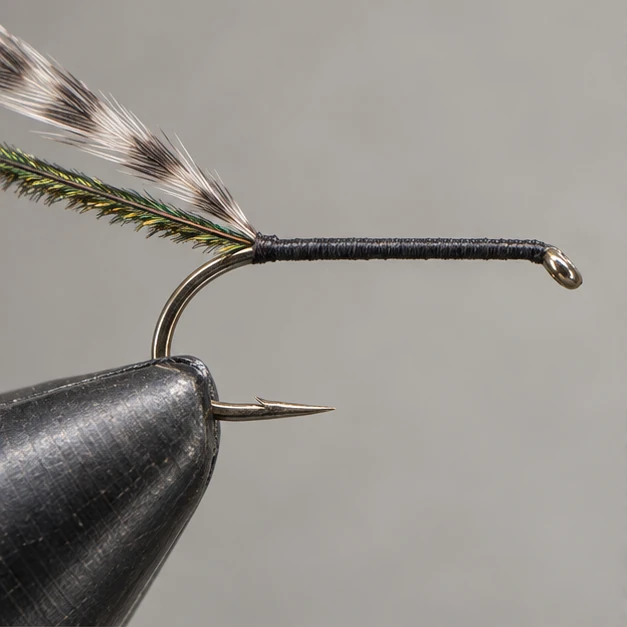
Start
Cover the shank with thread. Tie hackle and a peacock strand at the bend.
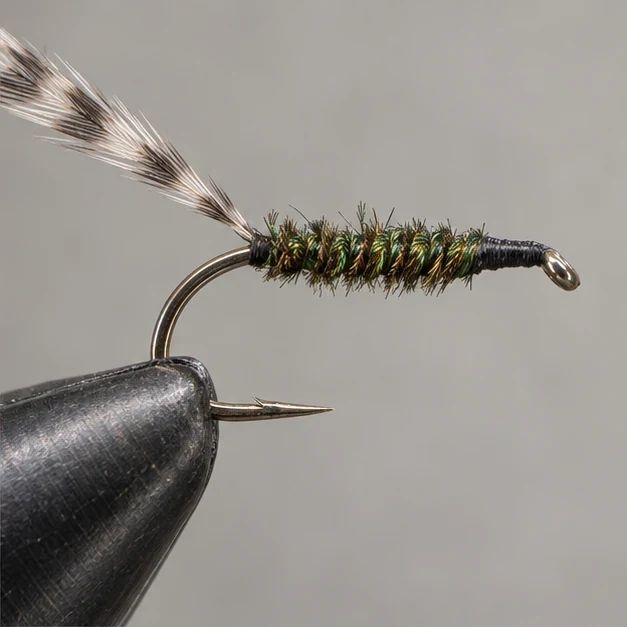
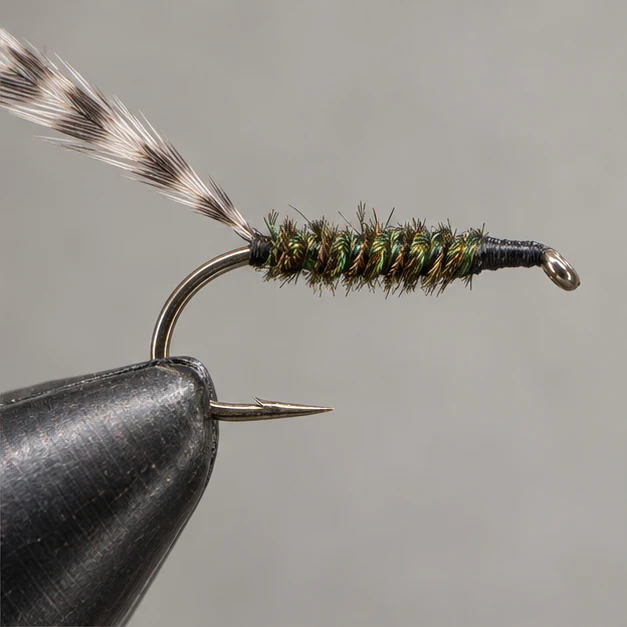
Wrap herl
Wind a slim peacock body forward, leaving room for the head. Secure and trim.
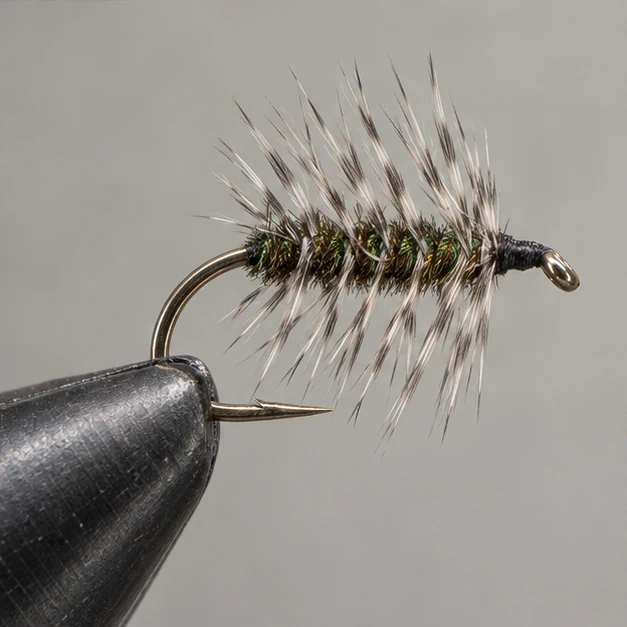
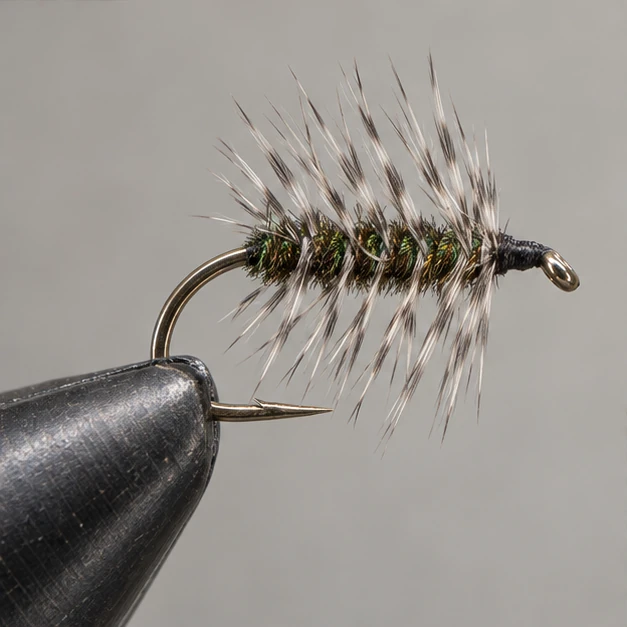
Add hackle
Spiral grizzly hackle through the body and secure behind the eye.
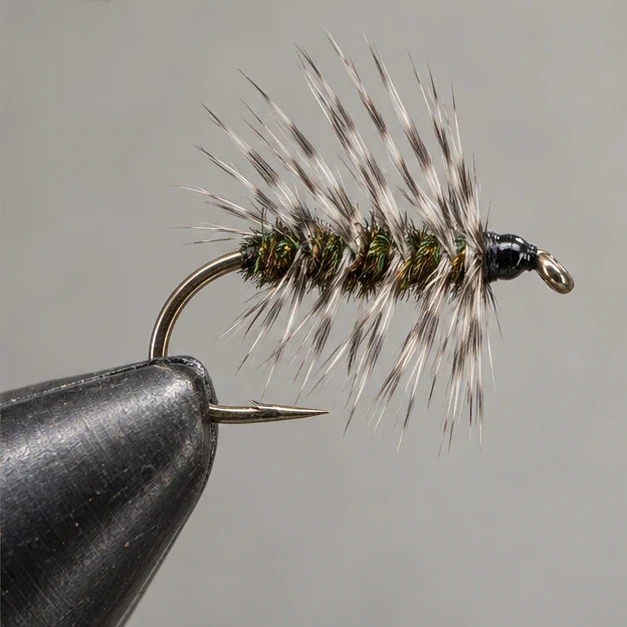
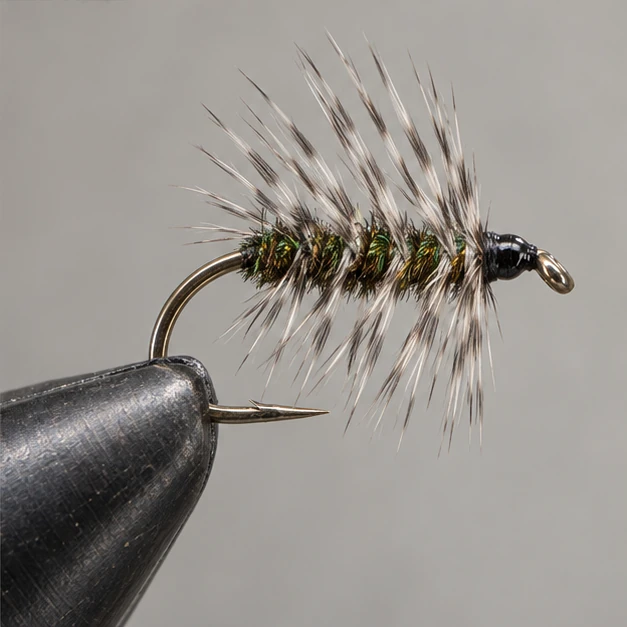
Finish
Trim excess, whip finish, and cement the thread. Keep hackle out of the eye.
On the water.
Dead-drift in the surface film when trout feed on midges or small clusters. Match the hatch rather than automatically choosing the smallest hook.
Find your Griffith’s Gnat.
Have this pattern tied for your water.
No versions are listed yet. Choose a tyer and ask about your sizes, colors and materials. The tyer must confirm availability and send an offer.
Recipe references
Materials and tying methods may vary between versions. Compare the sources below for this dressing.
Portrait reference
Pattern dressings vary; use the written recipe for exact materials and proportions.