FlyFysher
Foam Beetle
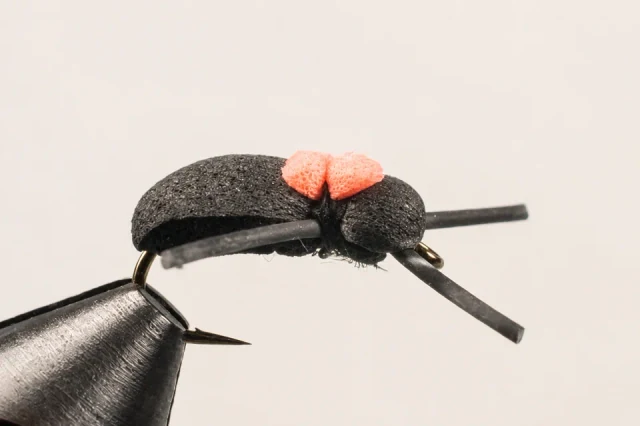
A foam shell and peacock belly give a compact beetle profile along banks.
- At the vise
- Beginner friendly
- Common sizes
- #10–16
At the vise.
Work through the numbered steps in order. Use the written materials and proportions as your guide; select an image for a closer look.
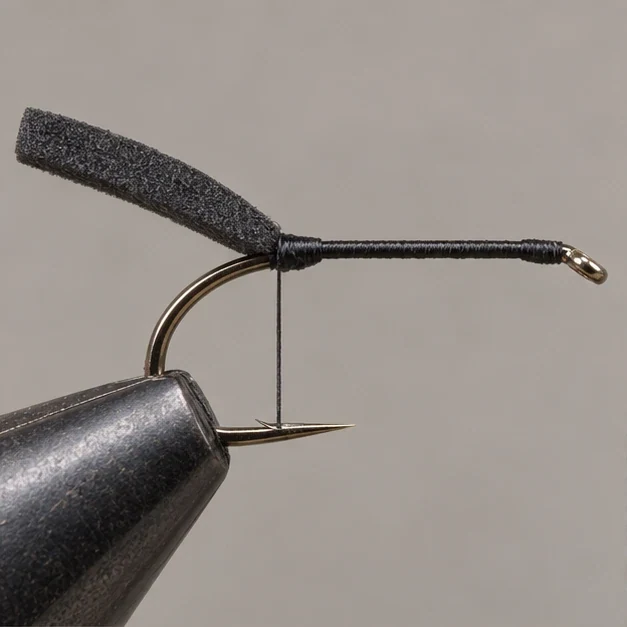
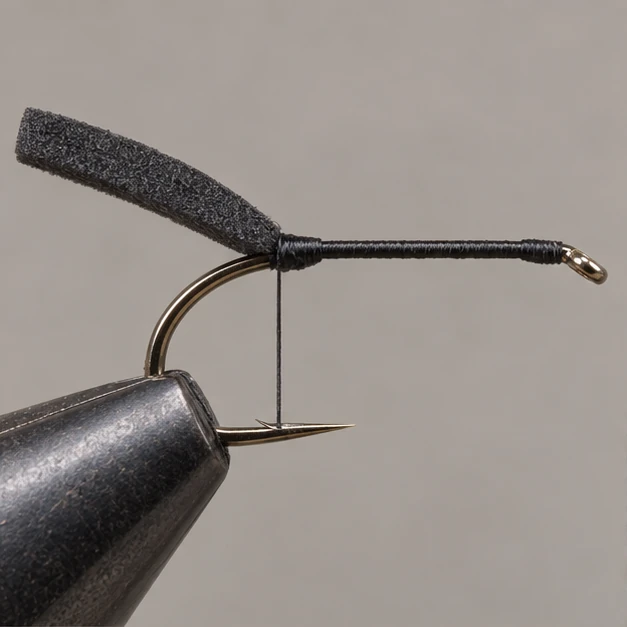
Prepare shell
Tie a hook-gap-wide foam strip at the bend with most of it extending rearward.
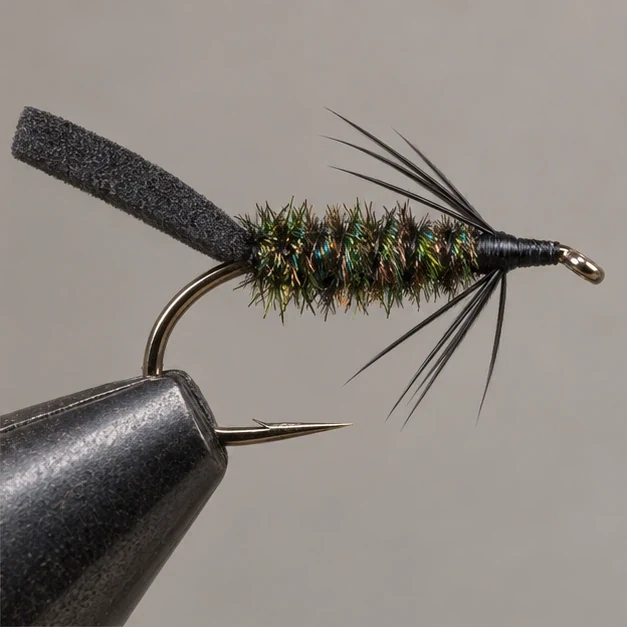
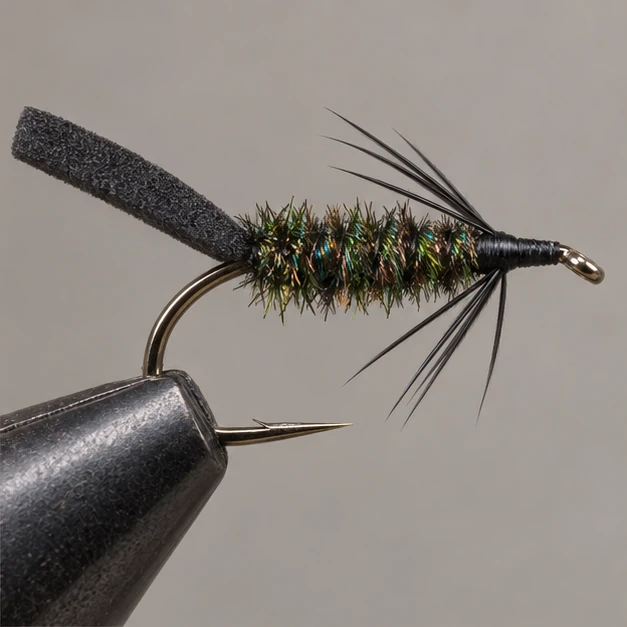
Belly and legs
Wrap a peacock body. Tie a few black hackle fibers across the top near the front as legs.
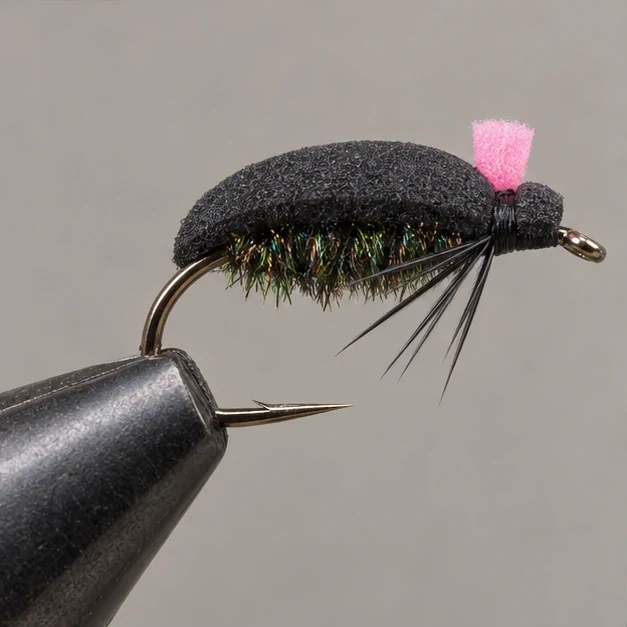
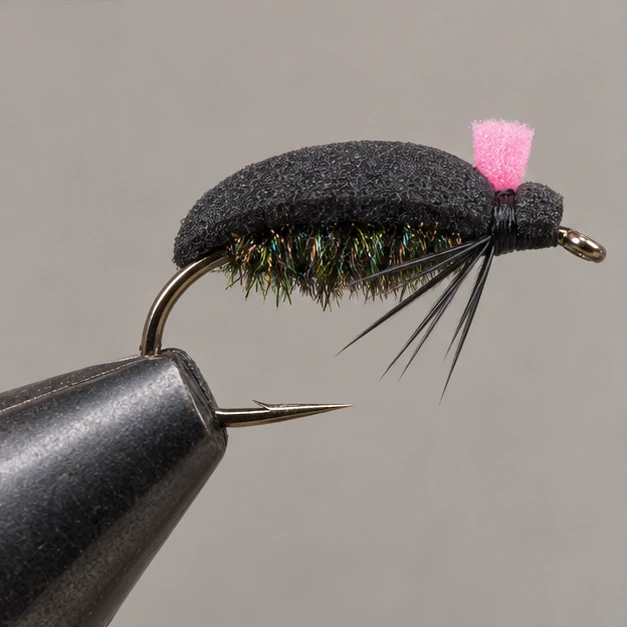
Fold the shell
Pull foam forward over the body and bind near the eye, leaving a short foam head. Tie a small pink sighter above.
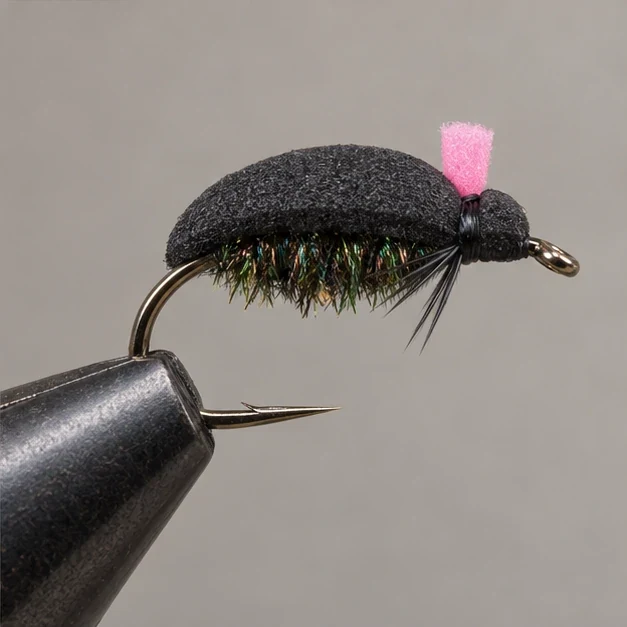
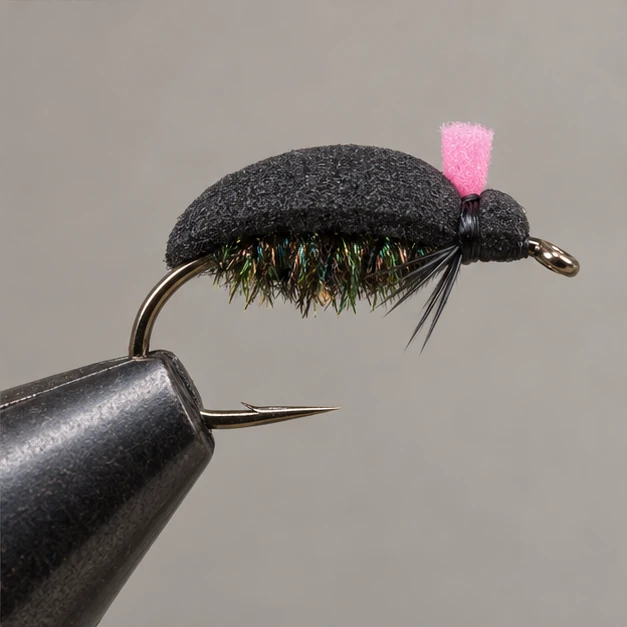
Finish
Whip finish beneath the head and cement the thread. Trim the leg fibers and clear the hook gap.
On the water.
Drift beside grass, overhanging branches, or pond margins where beetles enter the water.
Find your Foam Beetle.
Have this pattern tied for your water.
No versions are listed yet. Choose a tyer and ask about your sizes, colors and materials. The tyer must confirm availability and send an offer.
Recipe references
Materials and tying methods may vary between versions. Compare the sources below for this dressing.
Portrait reference
Pattern dressings vary; use the written recipe for exact materials and proportions.