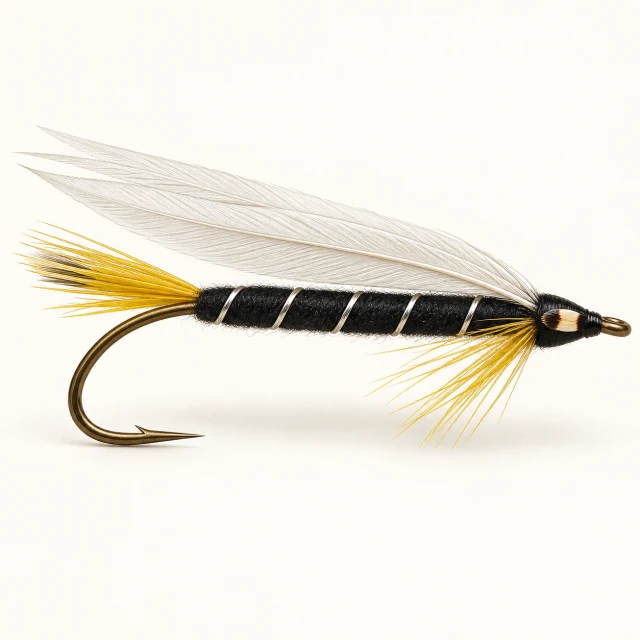
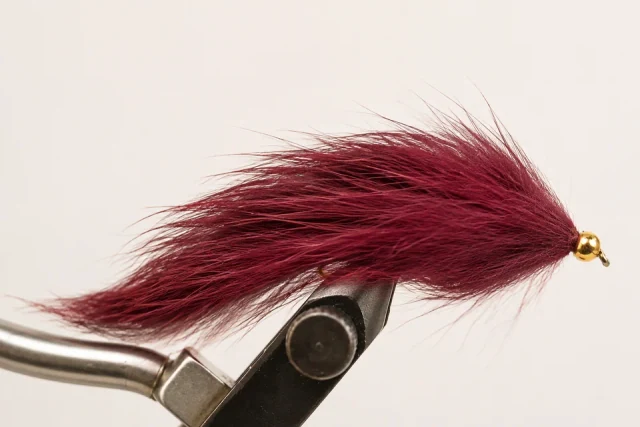
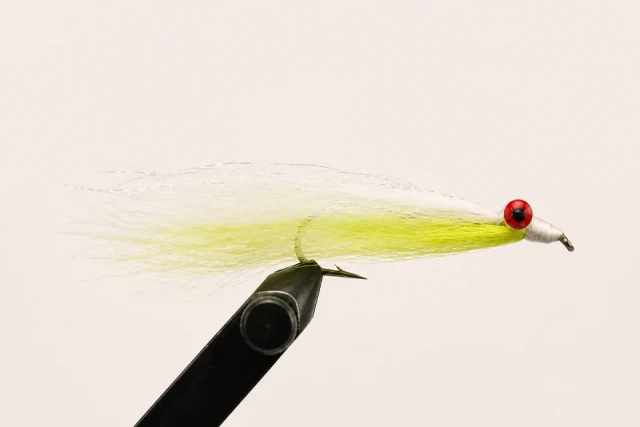
A simple straight-cut rabbit-strip fly, shown in an Alaska guide’s dressing for imitating drifting salmon flesh.
“Flesh fly” describes a family of salmon-flesh imitations rather than one proprietary dressing. This page uses Alaska West guide Matt Hynes’s fully documented basic rabbit-strip version: one straight-cut strip makes both the flowing tail and wrapped body. Other flesh-fly constructions are variations, not evidence of an exact universal recipe.
Work through the numbered steps in order, using the materials list and written proportions as your guide.
01
Lay a thread foundation
Mount the size-6 hook and cover the shank with white or pink thread from behind the eye toward the bend.
Bench note The foundation helps hold the hide from rotating around the bare hook.
02
Anchor the rabbit tail
Choose a cream straight-cut rabbit strip and leave about an inch and a half trailing behind the bend. Part the fur at the tie-in point to expose the hide, then bind the hide to the shank with firm wraps.
Bench note Tie through the exposed hide, not a tuft of hair, to keep the strip secure.
03
Spiral the same strip forward
Move the tying thread near the eye. Wind the rabbit strip forward around the shank in spaced turns, gently tensioning the hide and sweeping loose fur away from each turn.
Bench note Open turns reduce hide bulk while letting the fur fill the body.
04
Tie off without crowding
Bind the strip a short distance behind the eye and cut the remaining hide at a slight angle. Form a small thread head and whip finish.
Bench note An angled cut reduces the bump where the hide ends.
05
Taper the trailing tail
Trim the free hide to a soft point so the tail moves naturally; shorten it if its length causes it to foul around the hook.
Bench note Avoid cutting straight across the end of the strip.
Beyond the bench
On the water.
Drift or swing the soft rabbit fly where trout encounter loose salmon flesh. Adjust its size and color to the available food; the simple dressing has no built-in bead or weighted eyes.