FlyFysher / Pattern library / Caddis Nymph Written tying guide
Ed Berg’s beadhead Caddis Larvae with tapered cream body 5 numbered steps and a complete materials list for this dressing.
Read the tying steps Caddis larva / Pattern notes
Caddis Nymph A compact beadhead caddis larva with a tapered cream latex body and clear flexible finish.
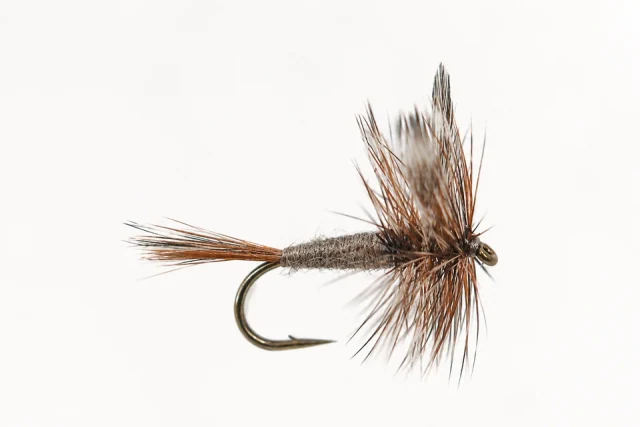
The source index labels a Beadhead Caddis Nymph but does not provide the pictured fly’s recipe. This page uses Ed Berg’s separately published Caddis Larvae dressing as a reproducible beadhead exemplar; the index photo has not been identified as Berg’s fly.
At the vise Beginner friendly
Common sizes #10 Materials Tying steps On the water Flies & tyers At your bench
The materials. Ed Berg’s beadhead Caddis Larvae with tapered cream body
Source-informed recipe; specialist review pending.
Hook TMC 2488 or Dai-Riki 125 scud hook, size 10
Bead Mayfly-brown tungsten bead, 1/8 inch
Thread White 3/0
Body Rainy’s Large natural Round Rubber Legs latex
Coating Clear flexible Softex Tools Vise Bobbin Scissors Whip-finishing tool Fine coating brush A note on this version Berg describes natural cream latex with an optional brown shoulder tint. His green-marker variant suggests another larval color, but the source photo’s materials remain unknown.
From hook to fly
At the vise. 5 steps Work through the numbered steps in order, using the materials list and written proportions as your guide.
01
Mount the bead Slide the brown tungsten bead onto the scud hook and clamp it in the vise. Start white thread just behind the bead and build a small thread stop.
02
Anchor the body strip Tie the natural round latex just behind the bead. Stretch it and bind it down along the curved shank to the bend.
03
Smooth the foundation Return the thread toward the bead over the tied-down latex to make an even, slender underbody.
04
Wind a tapered larva Wrap the latex forward while gradually reducing tension. The later turns become slightly thicker toward the bead, forming a tapered larval body.
05
Finish and coat Tie off the latex behind the bead, trim it and whip finish. Brush a thin, continuous layer of clear flexible Softex over the body and allow it to dry.
Beyond the bench
On the water. Dead-drift it deep along the streambed, where a caddis larva can be dislodged and carried to trout.
Have this pattern tied for your water. No versions are listed yet. Choose a tyer and ask about your sizes, colors and materials. The tyer must confirm availability and send an offer.
Recipe references Original written instructions adapted from the sources below. Materials and methods may vary between versions.