FlyFysher
Ally’s Shrimp
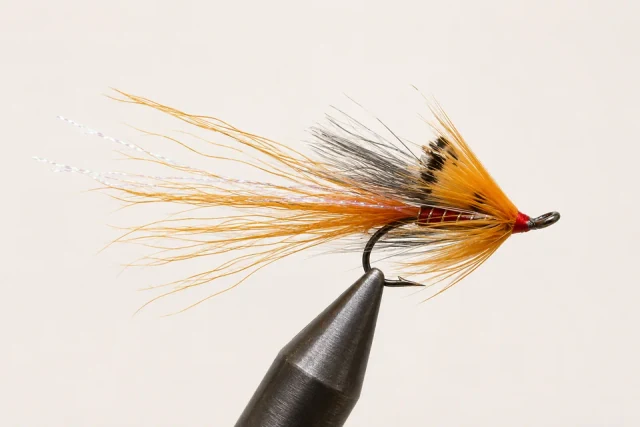
A long orange tail and mobile collar define this familiar Atlantic salmon pattern.
- At the vise
- Intermediate
- Common sizes
- #6–10
At the vise.
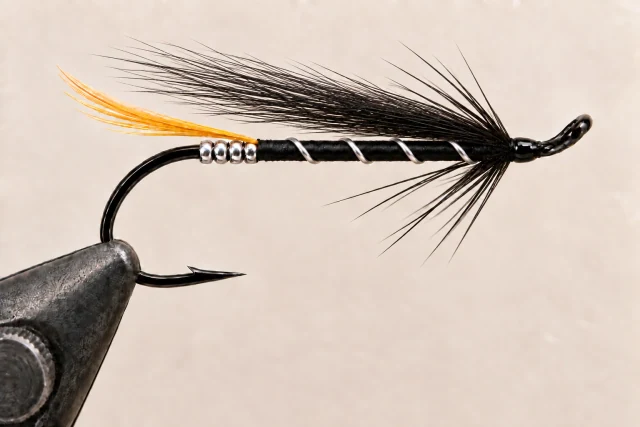
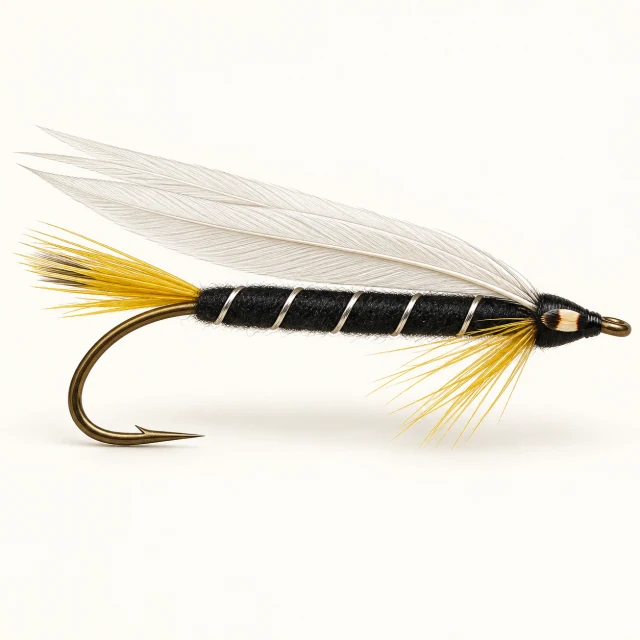
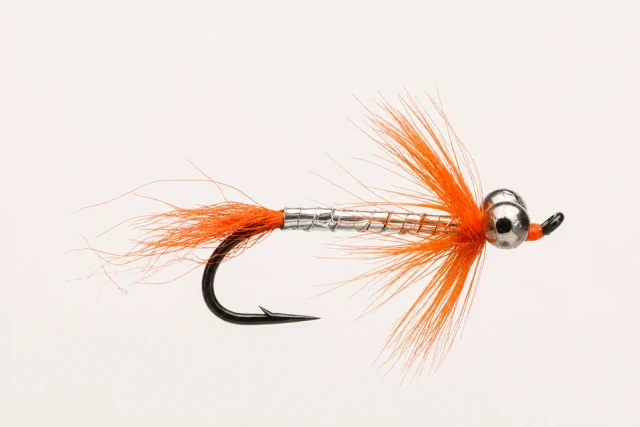
Work through the numbered steps in order. Use the written materials and proportions as your guide; select an image for a closer look.
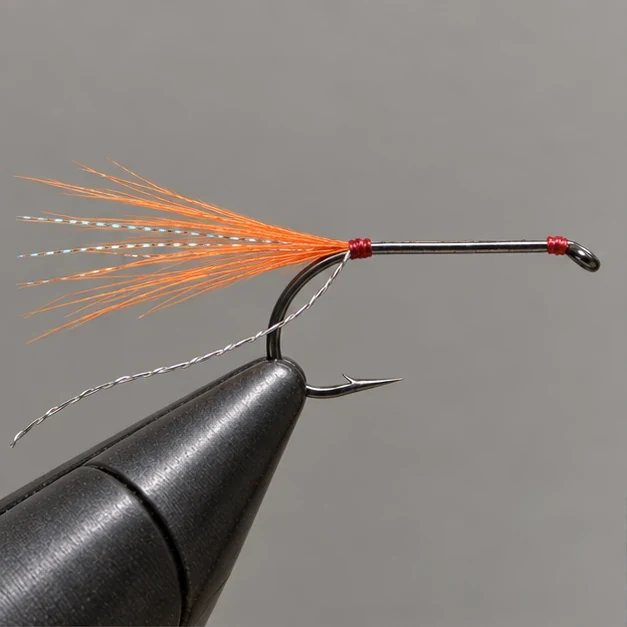
Tail and rib
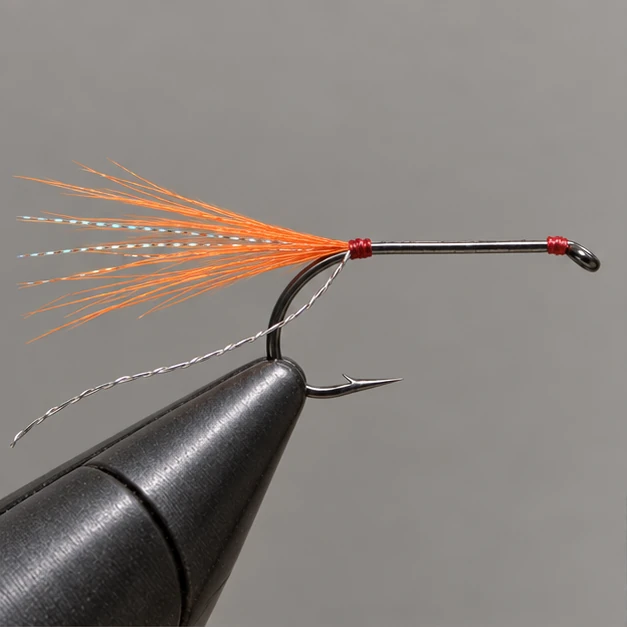
Tie a sparse orange tail roughly twice the shank length at the bend, with a few flash strands. Attach ribbing.
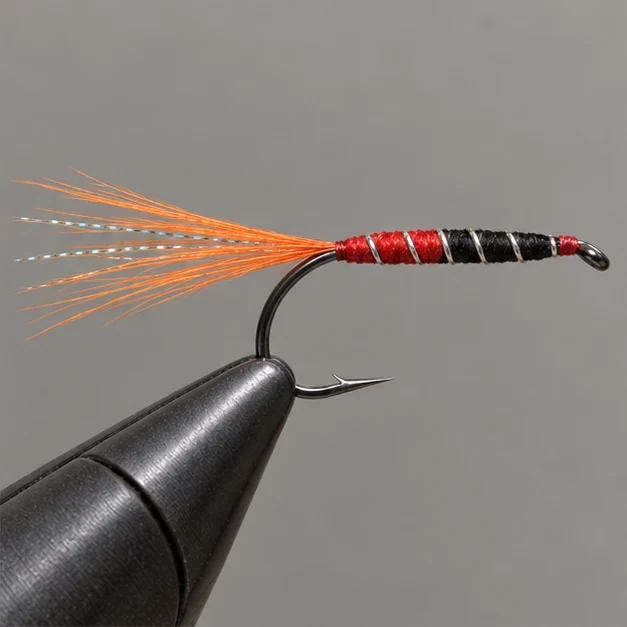
Body
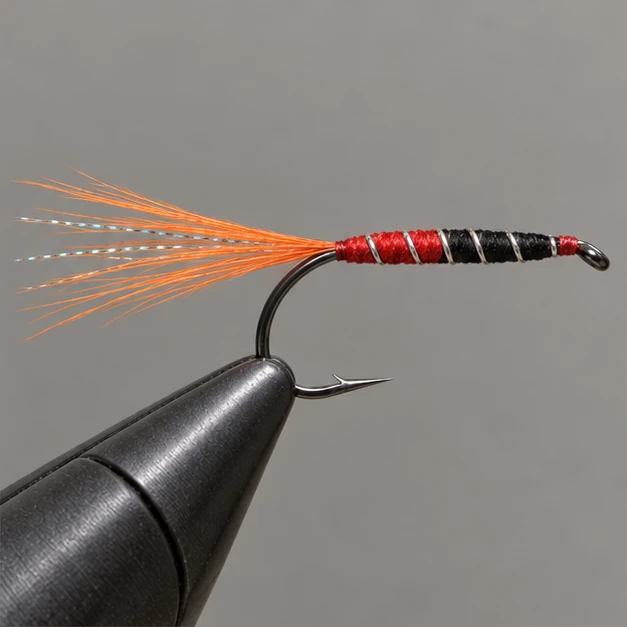
Wind red floss over the rear half and black floss over the front half. Spiral silver ribbing forward and secure.
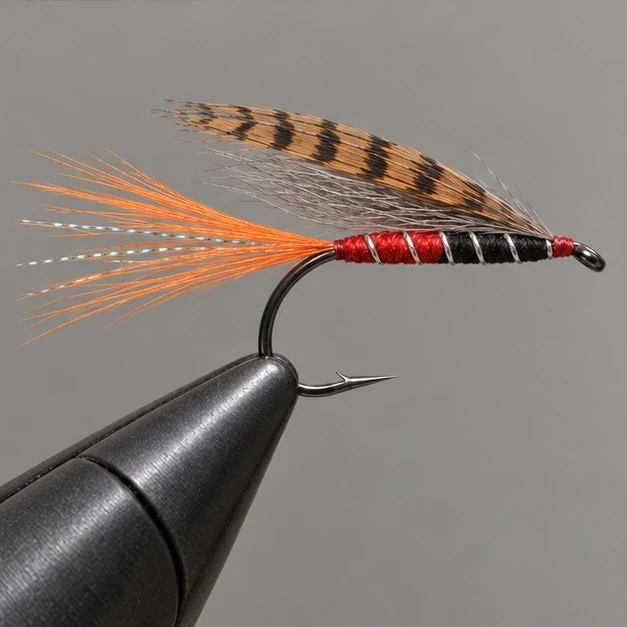
Wing
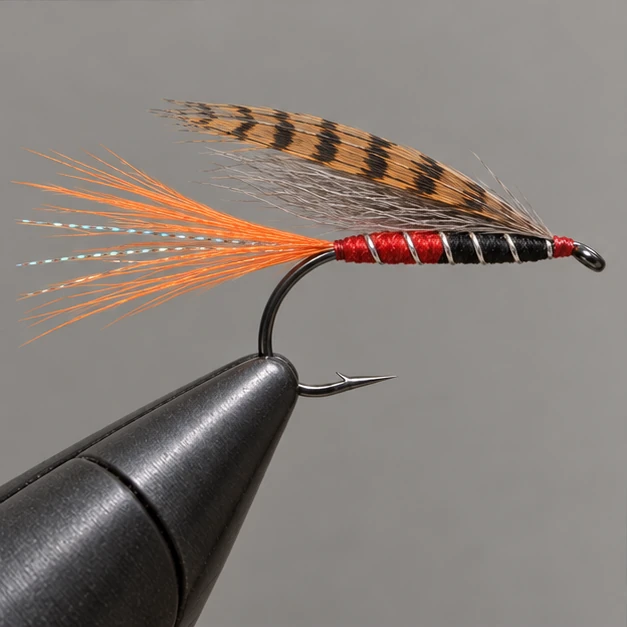
Tie a small squirrel underwing above the body, followed by a golden-pheasant tippet bunch pointing rearward.
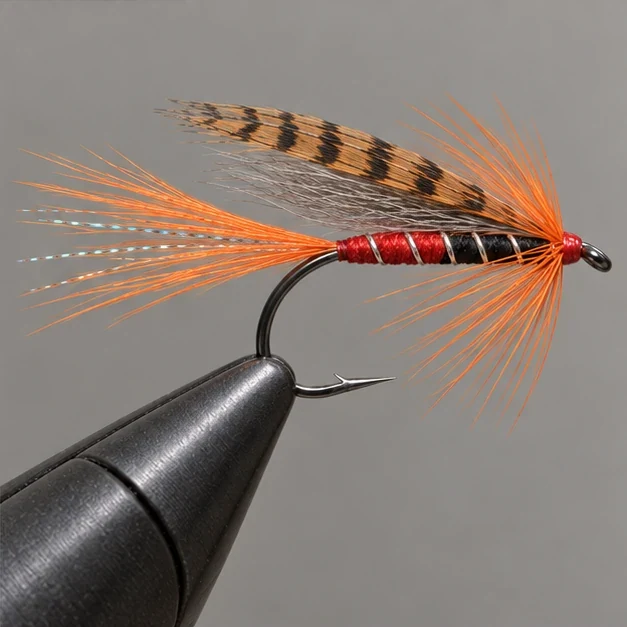
Hackle and head
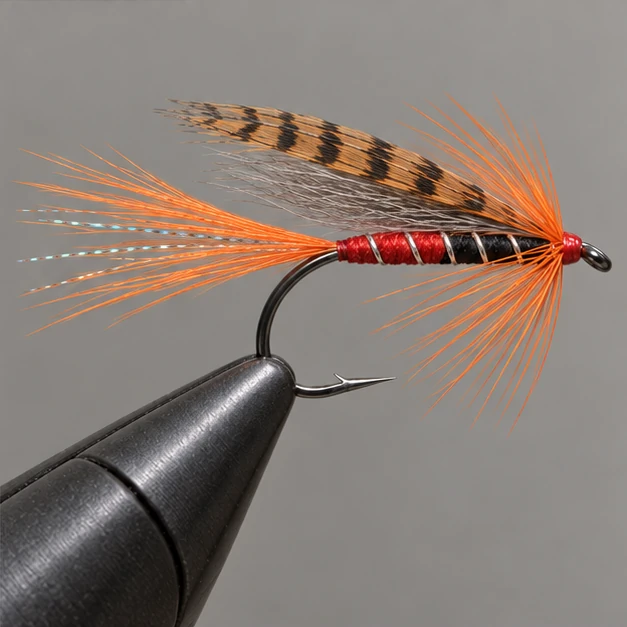
Wind a sparse orange collar in front of the wing, sweeping fibers back. Finish with a red thread head and cement.
On the water.
Swing for Atlantic salmon, adjusting presentation depth and fly size to the river conditions.
Find your Ally’s Shrimp.
Have this pattern tied for your water.
No versions are listed yet. Choose a tyer and ask about your sizes, colors and materials. The tyer must confirm availability and send an offer.
Recipe references
Materials and tying methods may vary between versions. Compare the sources below for this dressing.
Portrait reference
Pattern dressings vary; use the written recipe for exact materials and proportions.