FlyFysher
Comet
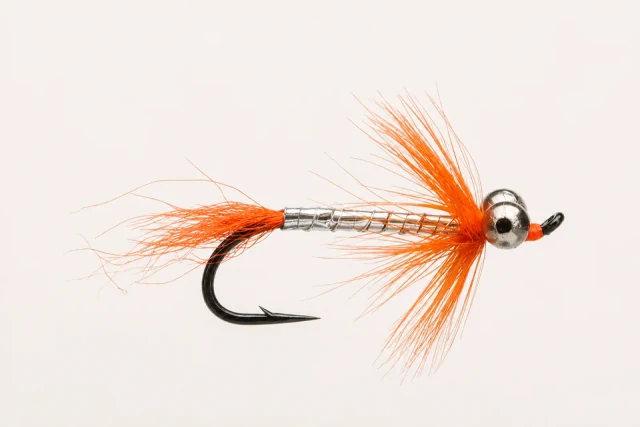
A bright bucktail tail, silver body, and soft collar make a compact swinging fly.
- At the vise
- Intermediate
- Common sizes
- #4–10
At the vise.
Work through the numbered steps in order. Use the written materials and proportions as your guide; select an image for a closer look.
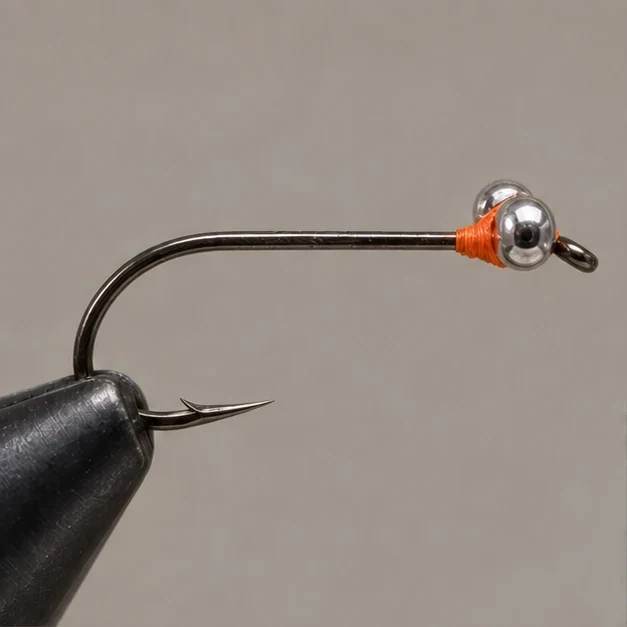
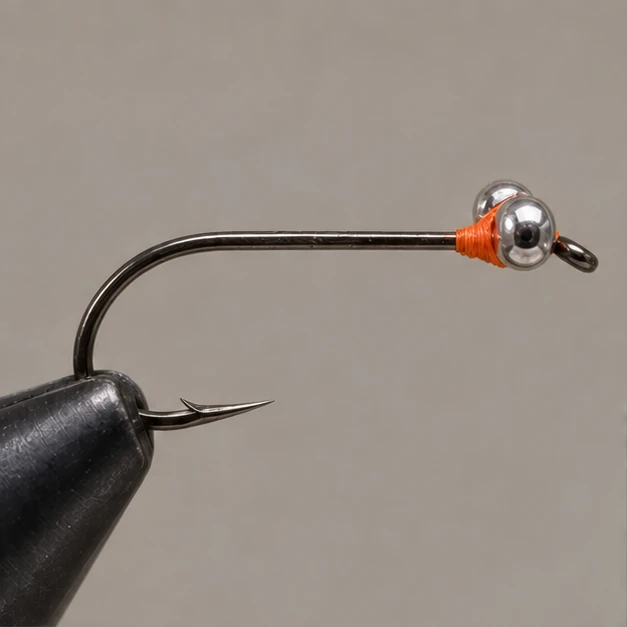
Eyes
Secure bead-chain eyes behind the hook eye with figure-eight wraps. Leave space behind them for the collar.
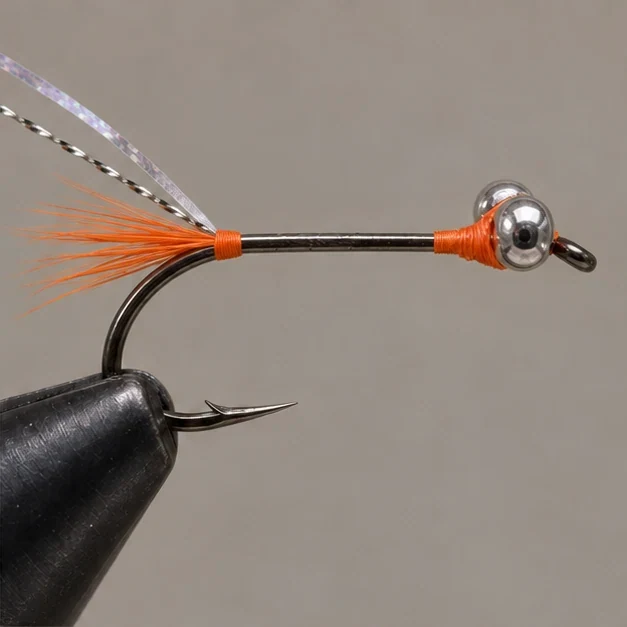
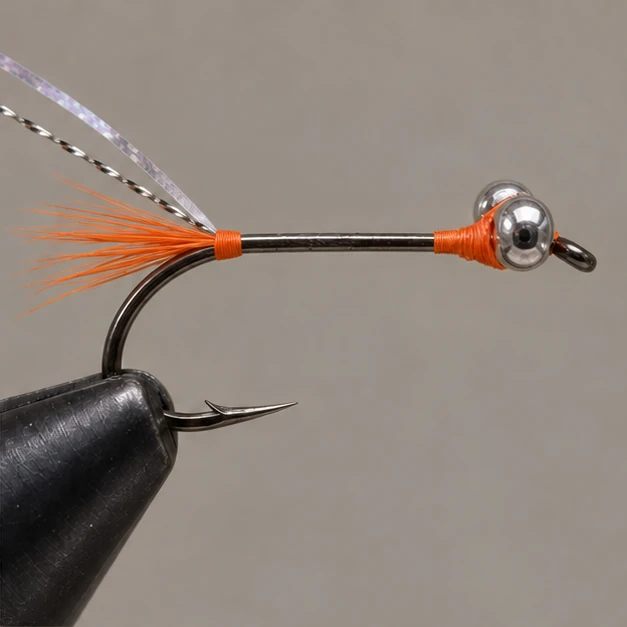
Tail
Tie a sparse orange tail about one shank long at the bend. Attach flat and oval tinsel.
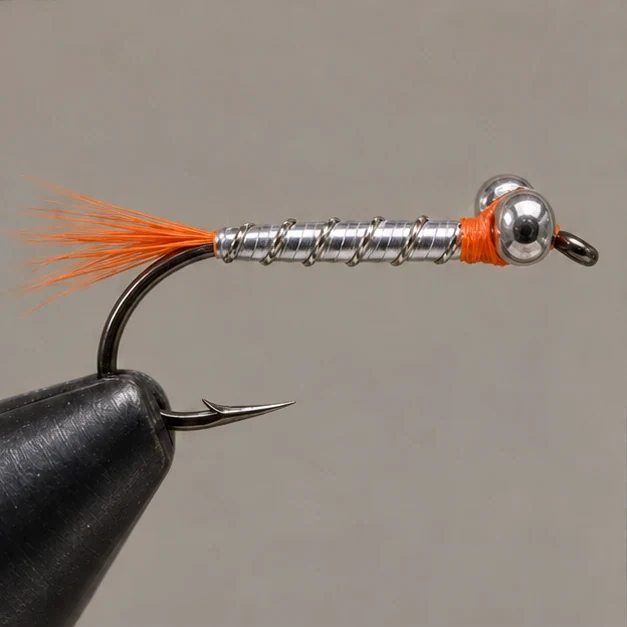
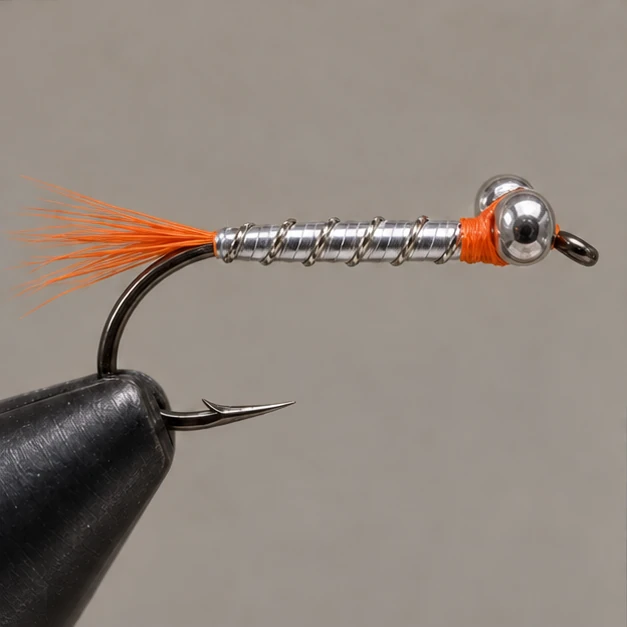
Body
Wrap flat tinsel forward in touching turns, followed by spaced oval-tinsel ribs. Secure behind the eyes.
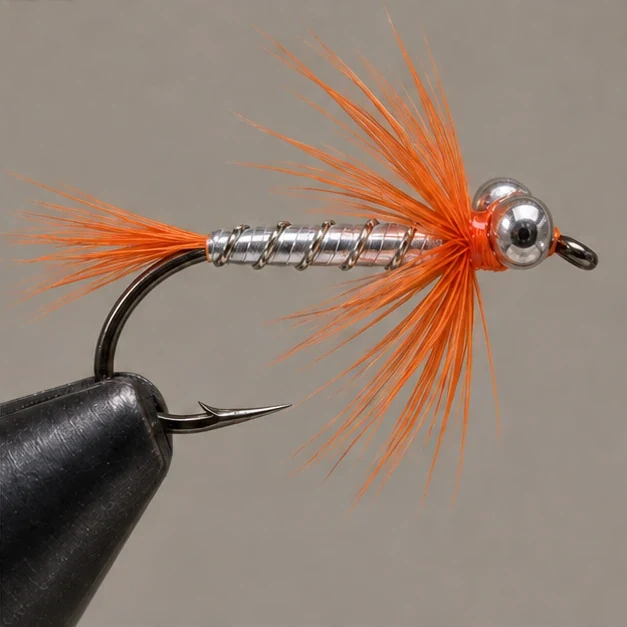
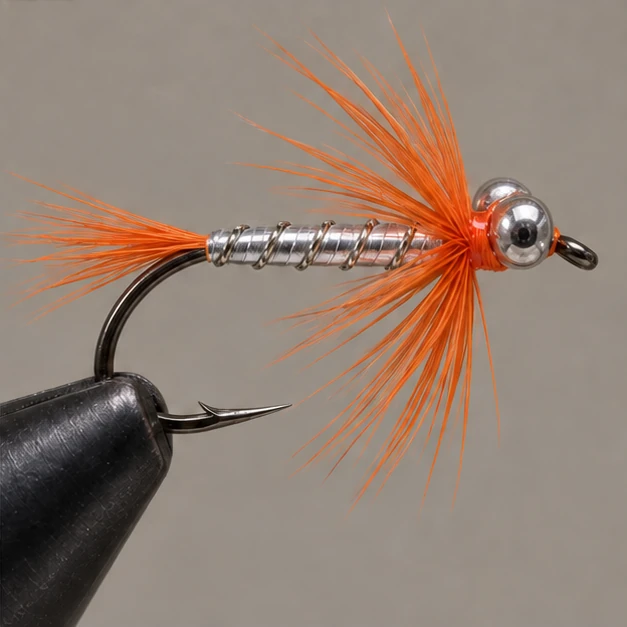
Collar
Wrap two or three hackle turns, sweeping fibers rearward. Secure, whip finish, and cement the head.
On the water.
Swing for steelhead or use as a compact Pacific salmon offering. It can also be stripped for smallmouth bass.
Find your Comet.
Have this pattern tied for your water.
No versions are listed yet. Choose a tyer and ask about your sizes, colors and materials. The tyer must confirm availability and send an offer.
Recipe references
Materials and tying methods may vary between versions. Compare the sources below for this dressing.
Portrait reference
Pattern dressings vary; use the written recipe for exact materials and proportions.