What size Zebra Midge for a winter tailwater?
By FlyFysher ·
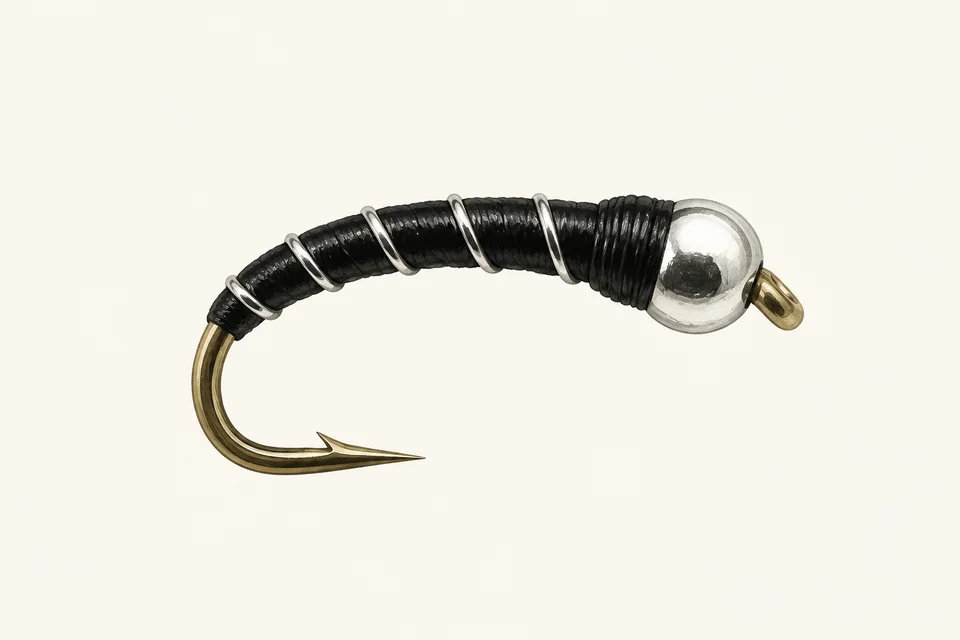
Begin with a slim size 20 Zebra Midge if you have no insect sample; that is the documented FlyFysher dressing. Carry a size 18 for larger midges and a size 22 when the visible insects are smaller. Hook size, added weight, and fishing depth are separate decisions.
Colorado guide Chip Swanson carries sizes 18–24 and most often fishes size 22 in his winter tailwaters. Zach Matthews describes sizes 18–22 as a useful core range. These are their observations, not a promise that size 22 is right for every river.
Make the size choice from what you can see
| Size | When to test it | Watch for |
|---|---|---|
| 18–20 | Larger visible midges, or a first test when you need a fly that is easier to tie on and track. | If fish feed on much smaller insects, scale down while keeping the body slim. |
| 22 | Small winter midges; Swanson says this is his usual Colorado starting size. | Check that the bead and body remain proportional to the hook. |
| 24 | Very small insects after you have checked the local hatch and can present a tiny fly. | This is outside FlyFysher’s documented 16–22 recipe range; ask a tyer to confirm a specific dressing. |
A hook number is only a starting label: hook shape and actual fly bulk affect the silhouette. The illustrated FlyFysher recipe uses a short curved size-20 hook, a silver bead, black thread and fine silver rib. It does not specify tungsten. If you need a faster-sinking version, ask for the bead material and weight explicitly.
Get the fly to the fish before changing size
Matthews argues that winter midge rigs often miss fish because they ride too close to the surface. For deep fishing he describes a tungsten-bead Zebra Midge or split shot above a small fly. Anglers All’s winter tailwater team likewise emphasizes adjusting depth and weight as conditions change.
- Look for a slower seam, channel or pocket with feeding fish rather than assuming every fast run fishes the same.
- Set your indicator and weight for that lane, then check whether the fly actually reaches it. Matthews places shot about eight inches above the fly in his example rig; treat that as a starting setup to adapt.
- Once the drift reaches the fish, use the visible midge size and takes or refusals to compare adjacent hook sizes.
Check current local flows, access rules and a nearby shop’s report before using a winter example from another tailwater.
A useful request for a tyer
Specify “black-and-silver Zebra Midge, size 20, short curved hook,” then ask whether the bead is silver-colored brass, tungsten, or another material. If your hatch calls for size 22 or 24, ask the tyer to confirm body and bead proportions for that hook.
See the Zebra Midge recipe · Check currently associated tyer listings
Check any listing for its exact hook size, bead material, and availability.